

Jože Plečnik: The Architect Who Shaped Ljubljana

Unique Souvenirs You Should Bring from Slovenia
January 23, 2026
1, 2 or 3 Days in Ljubljana: A Perfect First-Time Itinerary
January 30, 2026Jože Plečnik: The Architect Who Shaped Ljubljana
Jože Plečnik (1872–1957) is Slovenia’s greatest architect and a prominent figure in European architectural space in the 20th century. Trained in Vienna under Otto Wagner, and professionally active in Vienna and Prague before returning to his native Ljubljana, Plečnik brought classical architectural language into modern urban design. His work transformed Ljubljana from a provincial town into a symbolic capital with a unique identity. Selected works of his in Ljubljana were inscribed on the UNESCO World Heritage List in 2021 as The works of Jože Plečnik in Ljubljana – Human Centred Urban Design, recognising their outstanding universal value. (Portal GOV.SI)
Tromostovje (Triple Bridge)
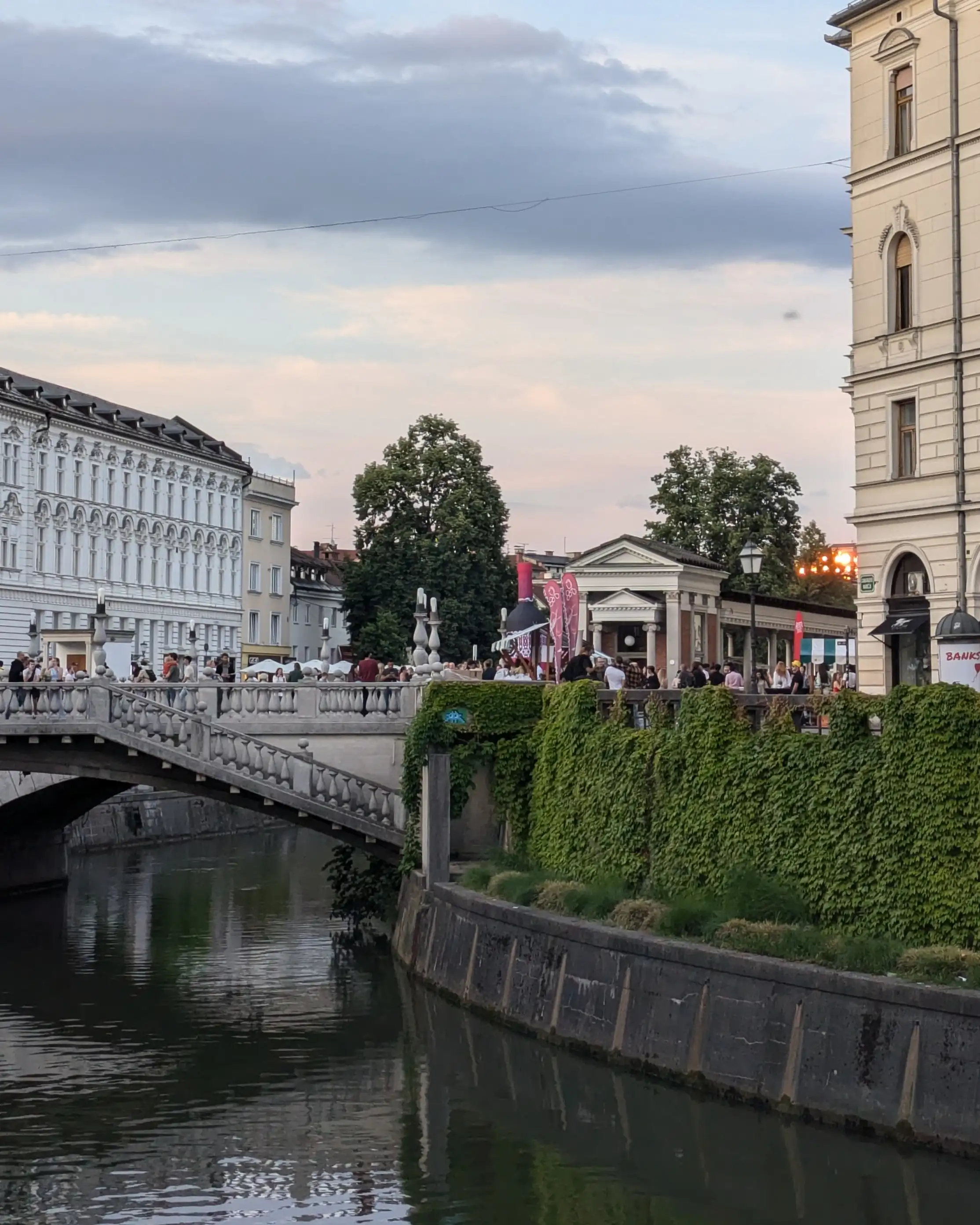
The Triple Bridge (Tromostovje) is arguably Ljubljana’s most iconic landmark. It consists of three connected bridges over the Ljubljanica River, connecting Prešeren Square to the other side of the river. Plečnik expanded a 19th-century central bridge in the early 1930s by adding two elegant pedestrian bridges at slight angles, creating a distinctive ensemble that improves circulation and frames views of the city centre. (Wikipedia)
Ljubljana Central Market & Covered Arcades
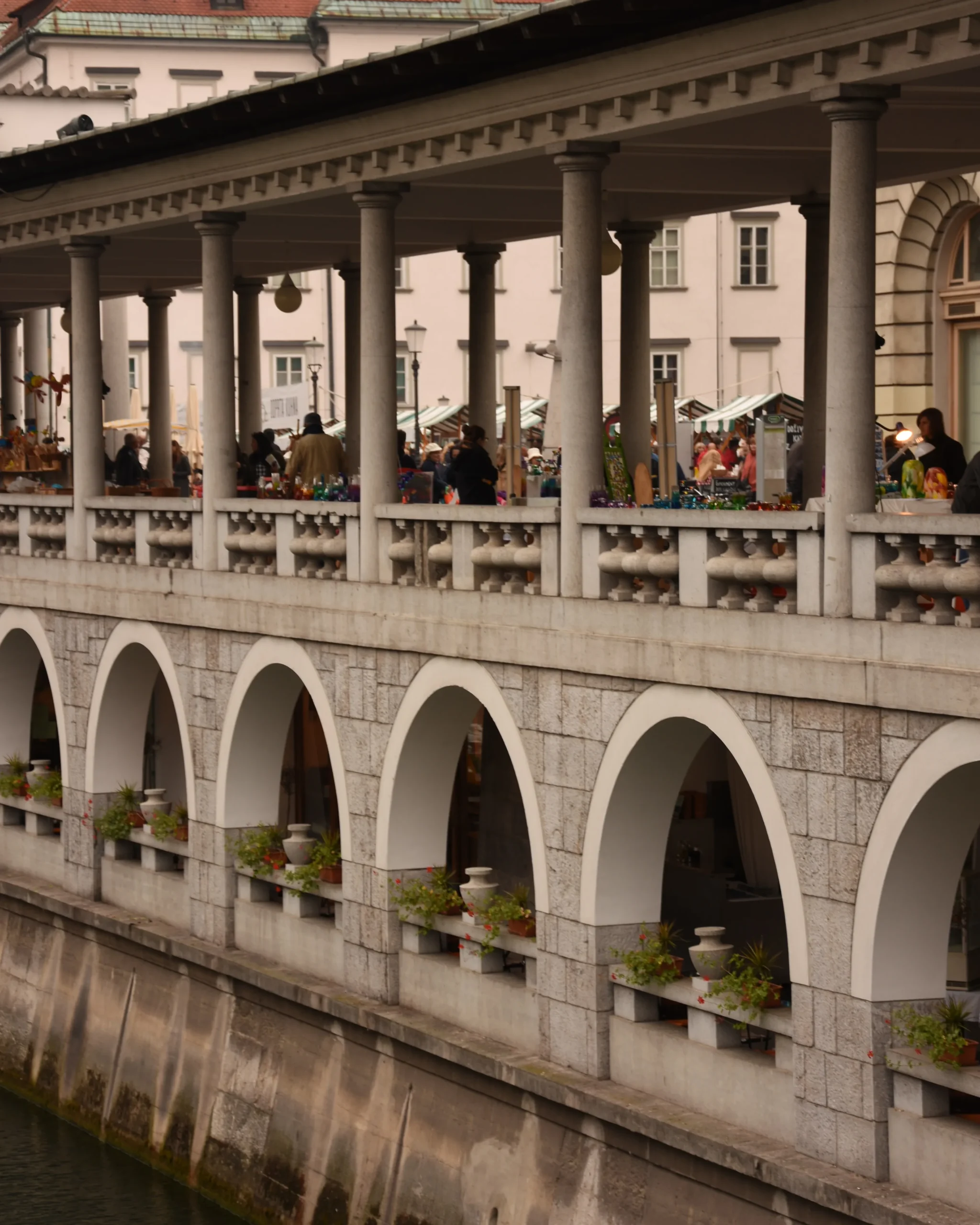
Plečnik redesigned the riverside Ljubljana Central Market with long, harmonious arcades and covered halls that follow the curve of the Ljubljanica. This market complex blends functional public space with refined classical elements, making everyday urban life part of the architectural experience. (Wikipedia)
National and University Library (NUK)
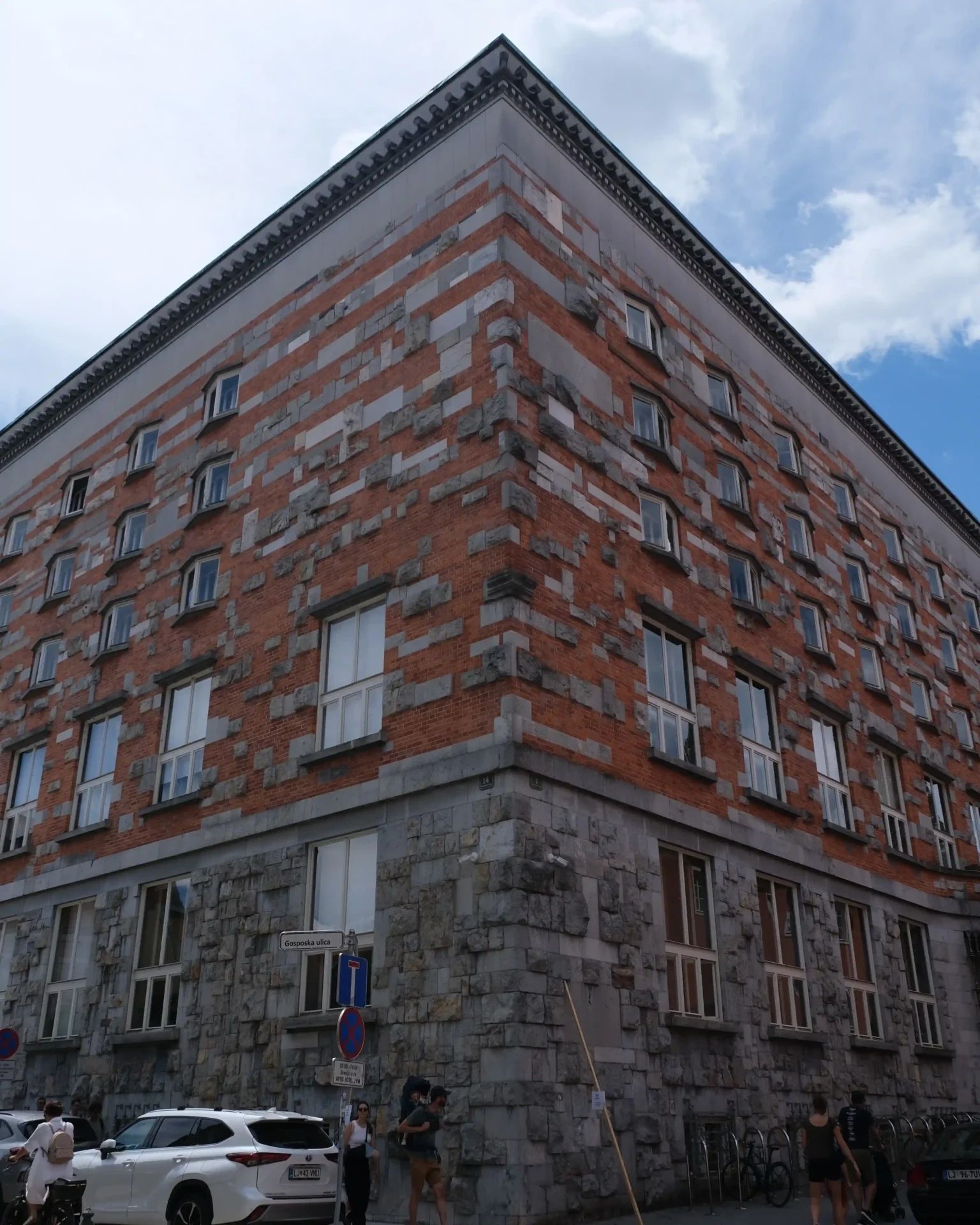
The National and University Library of Slovenia is considered one of Plečnik’s masterworks. Built between 1930 and 1941, its monumental brick and stone façade and carefully proportioned interior make it a landmark of cultural architecture. Plečnik even designed many interior details to create a cohesive architectural world. Step inside during opening hours and marvel at the breathtaking central corridor in dark stone. (Wikipedia)
Žale Cemetery (The Garden of All Saints)
Plečnik’s design for Žale Cemetery introduced a new concept of funerary architecture in Ljubljana. The Great Cemetery complex includes ceremonial avenues, chapels, and a monumental entrance arch with colonnades that symbolise the passage from life to death, combining dignified space with human-centred design. (Wikipedia)
Čevljarski most (Cobblers’ Bridge)
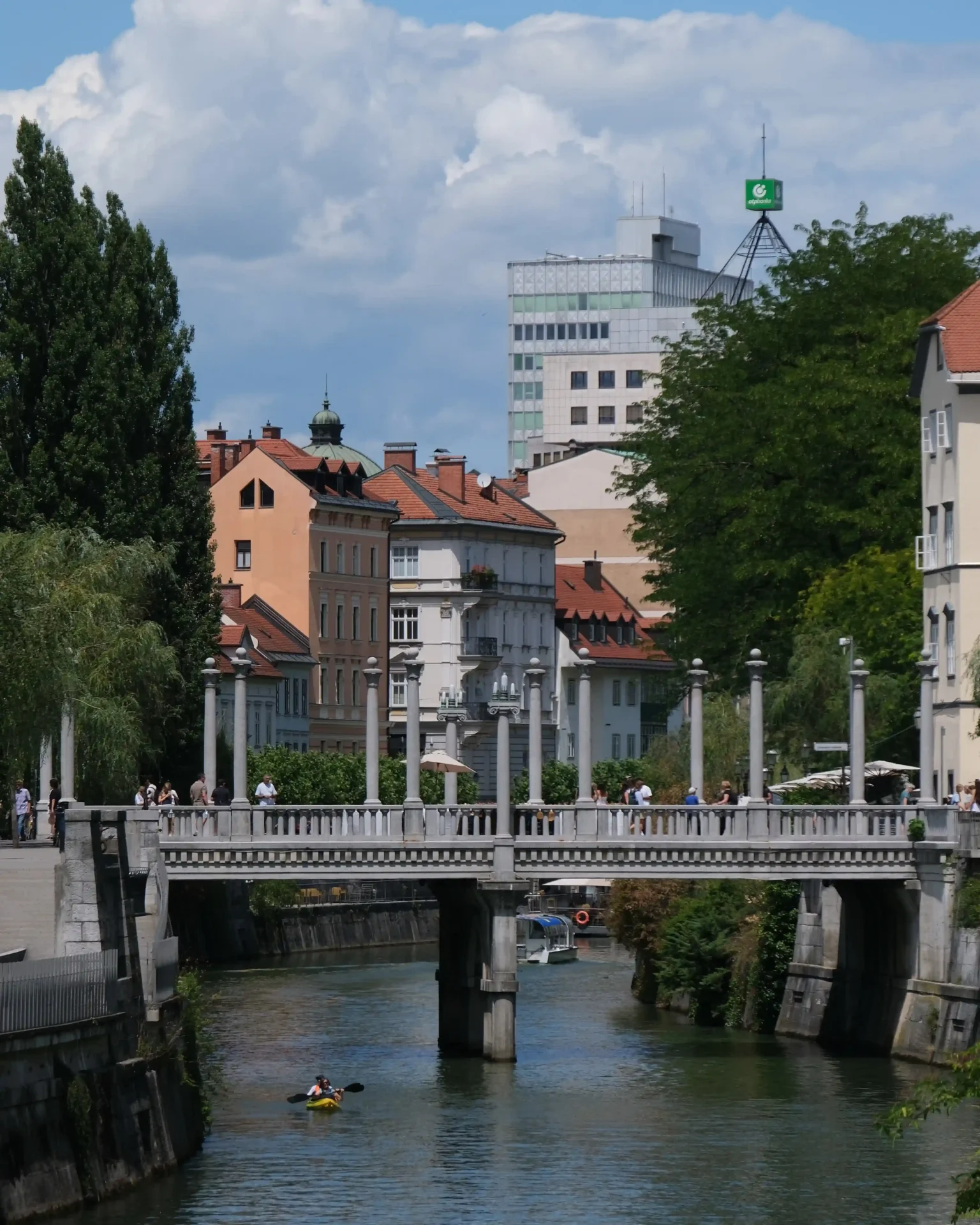
The Cobblers’ Bridge (Šuštarski most), crossing the Ljubljanica, connects parts of the historic centre and is decorated with classical pillars and balustrades. Although a medieval bridge existed here for centuries, Plečnik’s 1931 design gives it a sculptural, elegant presence integrated into the urban fabric. (Wikipedia)
Trnovski pristan & Trnovo Bridge
The Trnovski pristan embankment and Trnovo Bridge over the Gradaščica River are part of Plečnik’s expansion of Ljubljana’s water axis. The bridge is notable for its broad platform, planted birches, classical details, and sculptural elements — an inviting public space as much as a functional crossing. (Wikipedia)
Zapornica (Ljubljanica Sluice Gate)
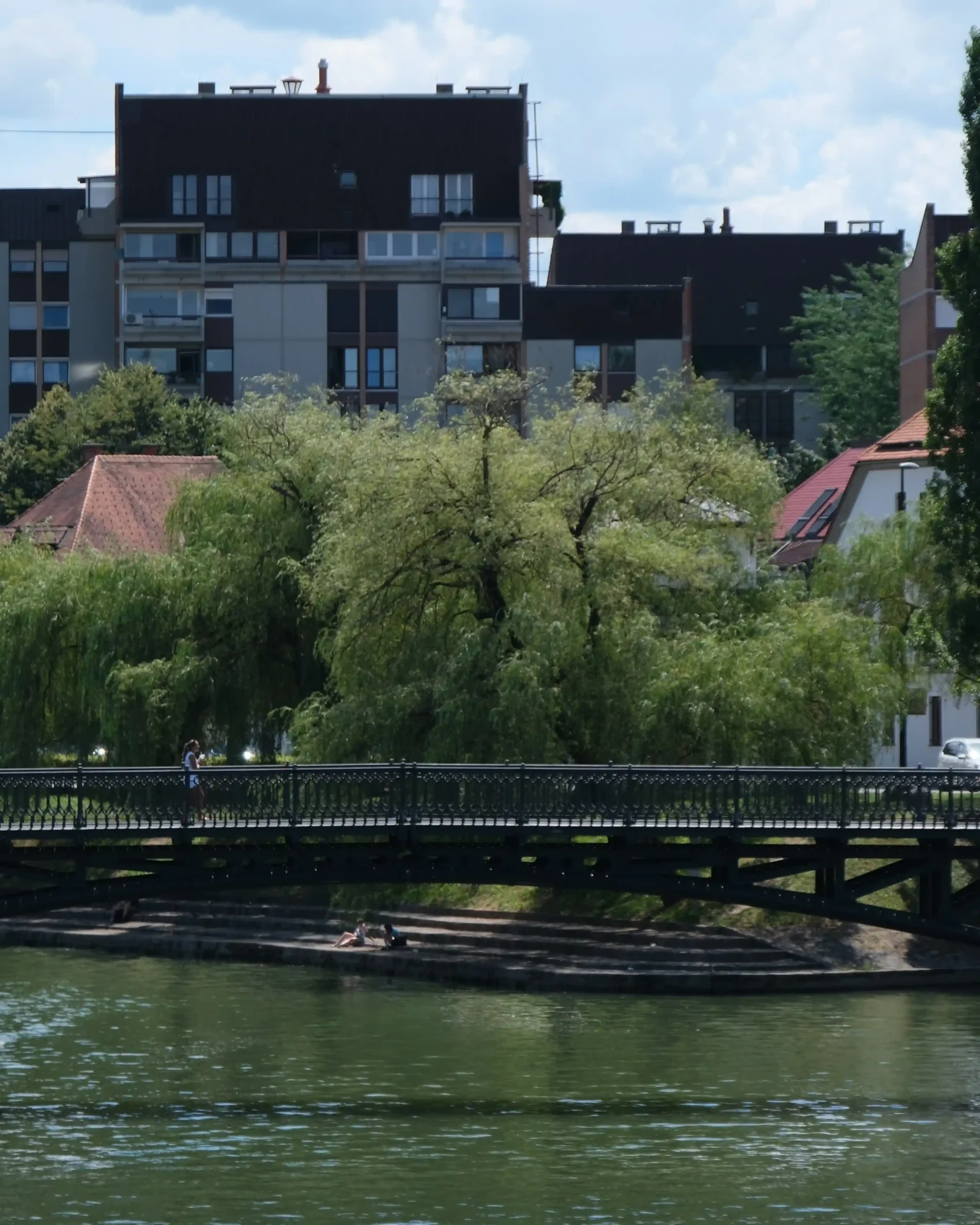
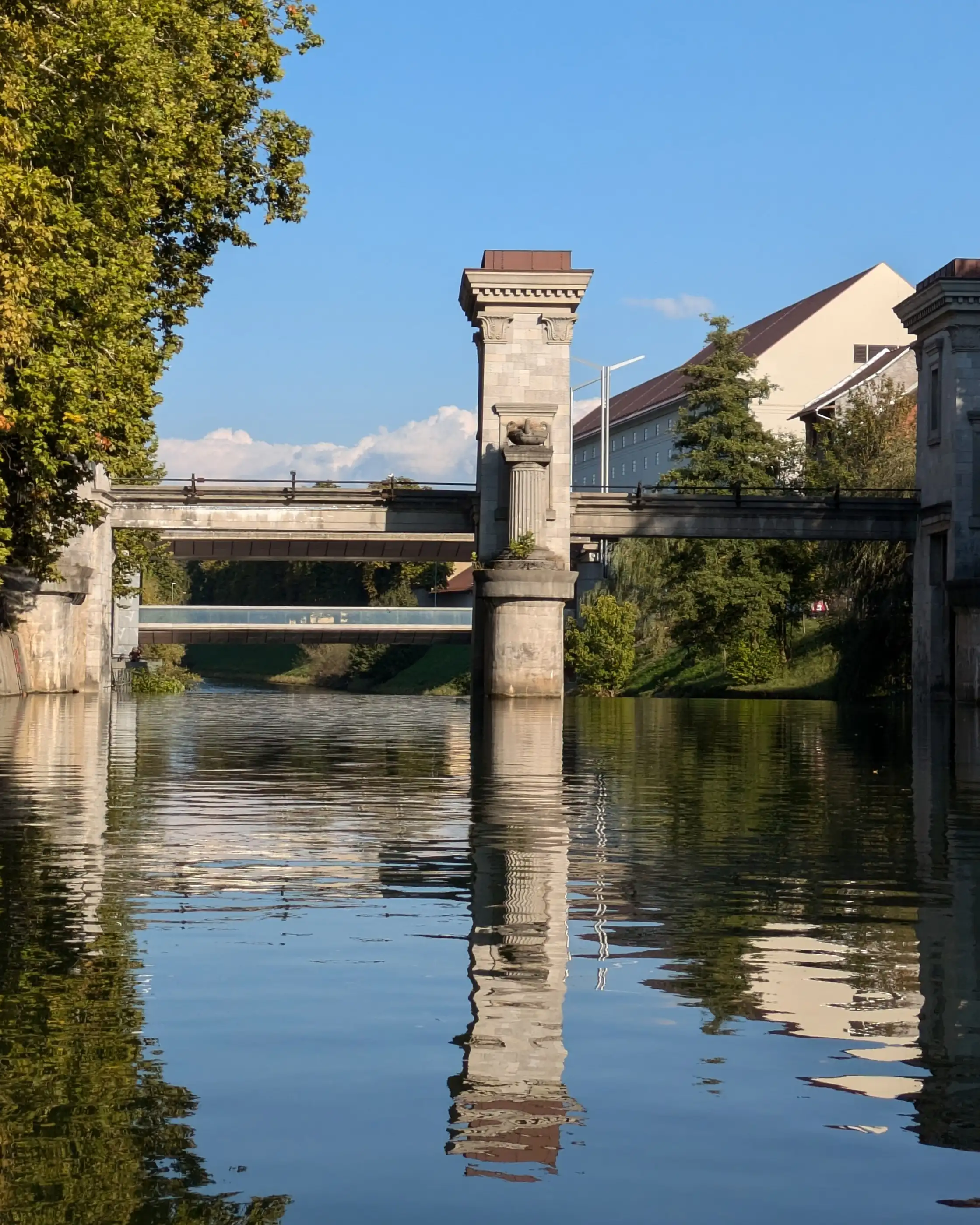
The Ljubljanica Sluice Gate (Slovene: Zapornica na Ljubljanici), also known as the Partition (Pregrada), is a sluice gate and triumphal arch on the Ljubljanica River in Ljubljana. Located between Cukrarna and Vraz Square, just east of the old town, it was designed in 1939 by architect Jože Plečnik as a monumental farewell to the river as it leaves the city centre. (Wikipedia)
Congress Square and Park Zvezda
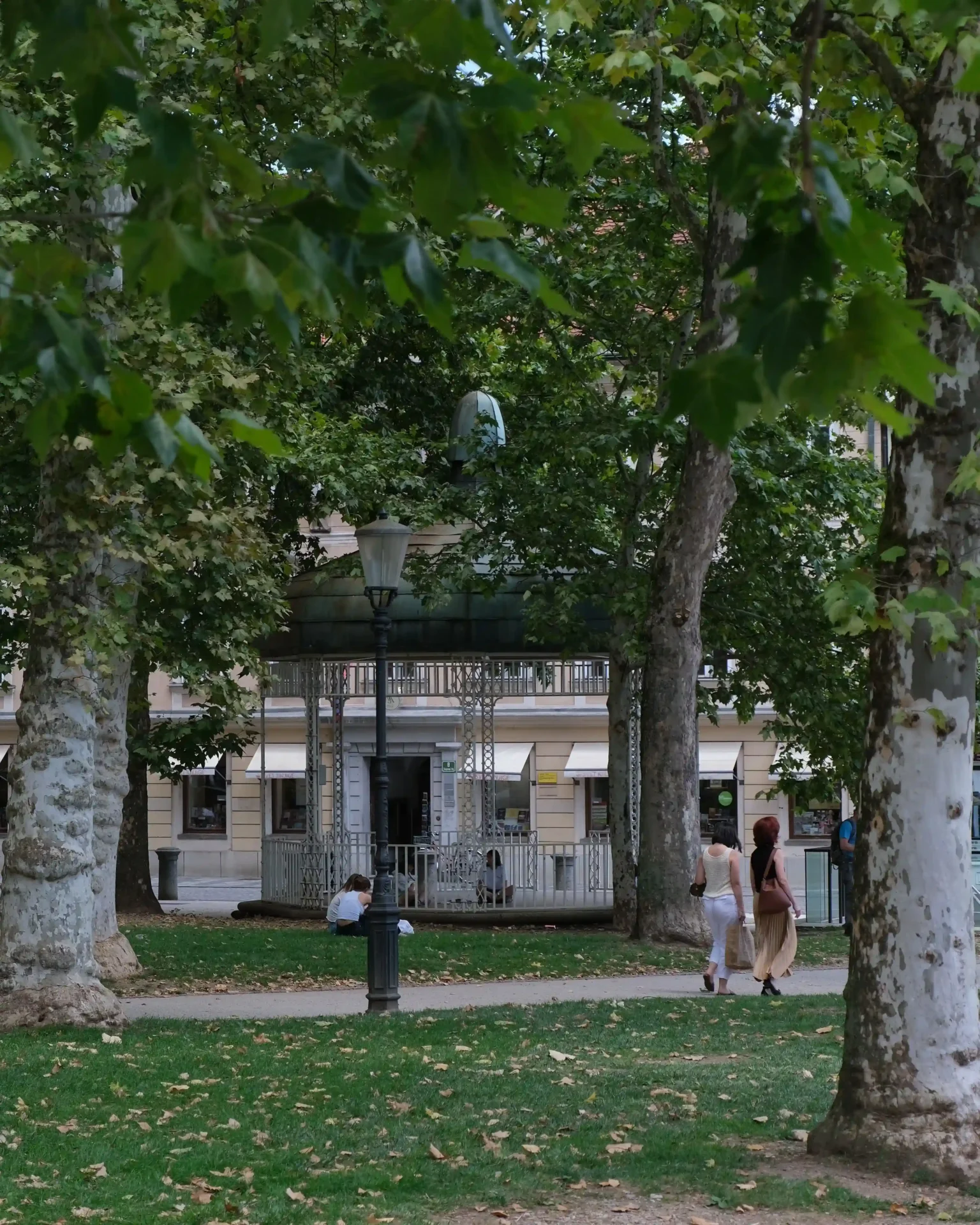
Congress Square (Kongresni trg) is a major urban place in Ljubljana that Plečnik redesigned in the late 1930s. Adjacent Park Zvezda gives a green promenade reaching toward the central city, forming part of his “land axis” of urban design that structures public space. (Wikipedia)
Križanke
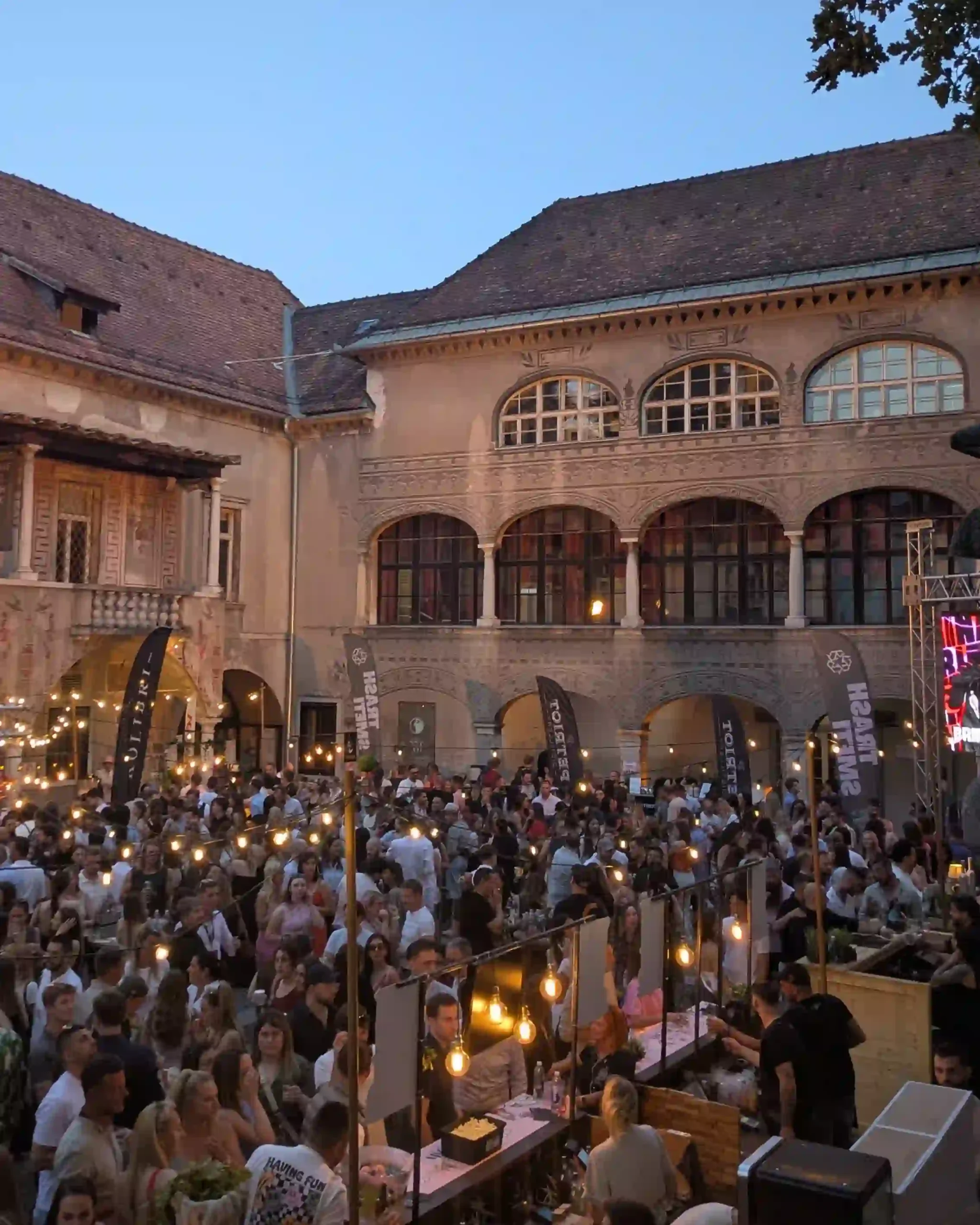
The Križanke complex - originally a 13th-century monastery - was transformed by Plečnik as a cultural venue with an open theatre and public spaces. His adaptation preserved historical layers while introducing new functions that enliven city life. (Wikipedia)
Here is a cocktail event Brina, that happens every year in June in Križanke.
Peglezen
Peglezen is a multi-storey house designed by architect Jože Plečnik, located on a triangular plot at the intersection of Poljanska Street (Poljanska cesta 1) and Kapiteljska Street in the Poljane district of Ljubljana. The building earned its name from its distinctive triangular shape, which resembles a clothes iron—known in archaic and colloquial Slovenian as peglezen. (Wikipedia)
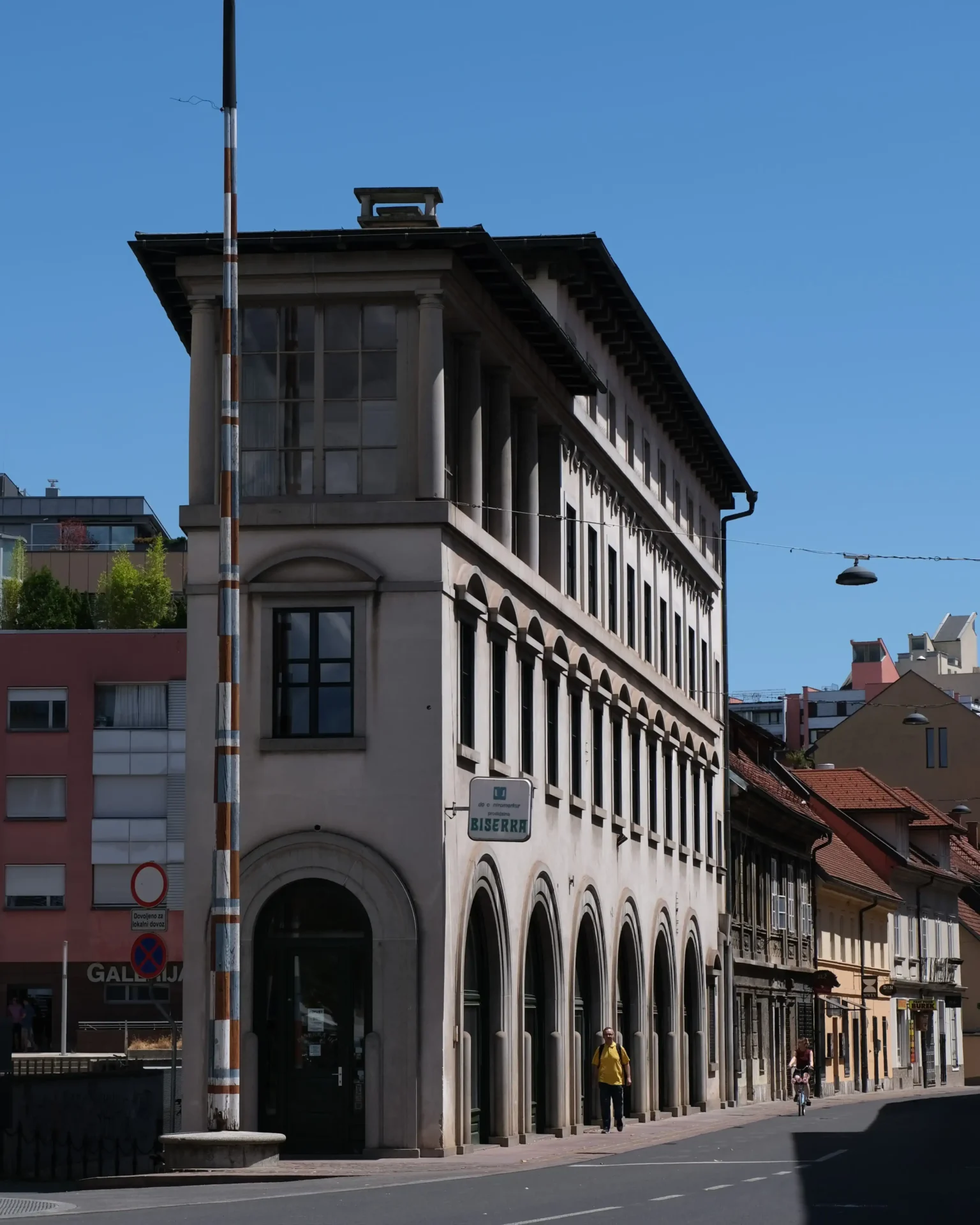
Cerkev sv. Mihaela na Barju (Church of St. Michael)
Just outside Ljubljana in the marshes of Barje, Plečnik’s Church of St. Michael (1937–39) blends classical proportions with local tradition and practical adaptation to its marshland site. Its simple yet expressive design makes it one of his most original small-scale works. (Wikipedia)
Fun Facts & Where to Go
- A design by Plečnik for a new Slovenian parliament (Katedrala svobode) — never realised — is depicted on the 10-cent euro coin of Slovenia.
- You can visit Plečnik House in the Trnovo district, where he lived and worked; it now houses a collection of his sketches, furniture, and personal items and is an architectural wonder in its own right.
-
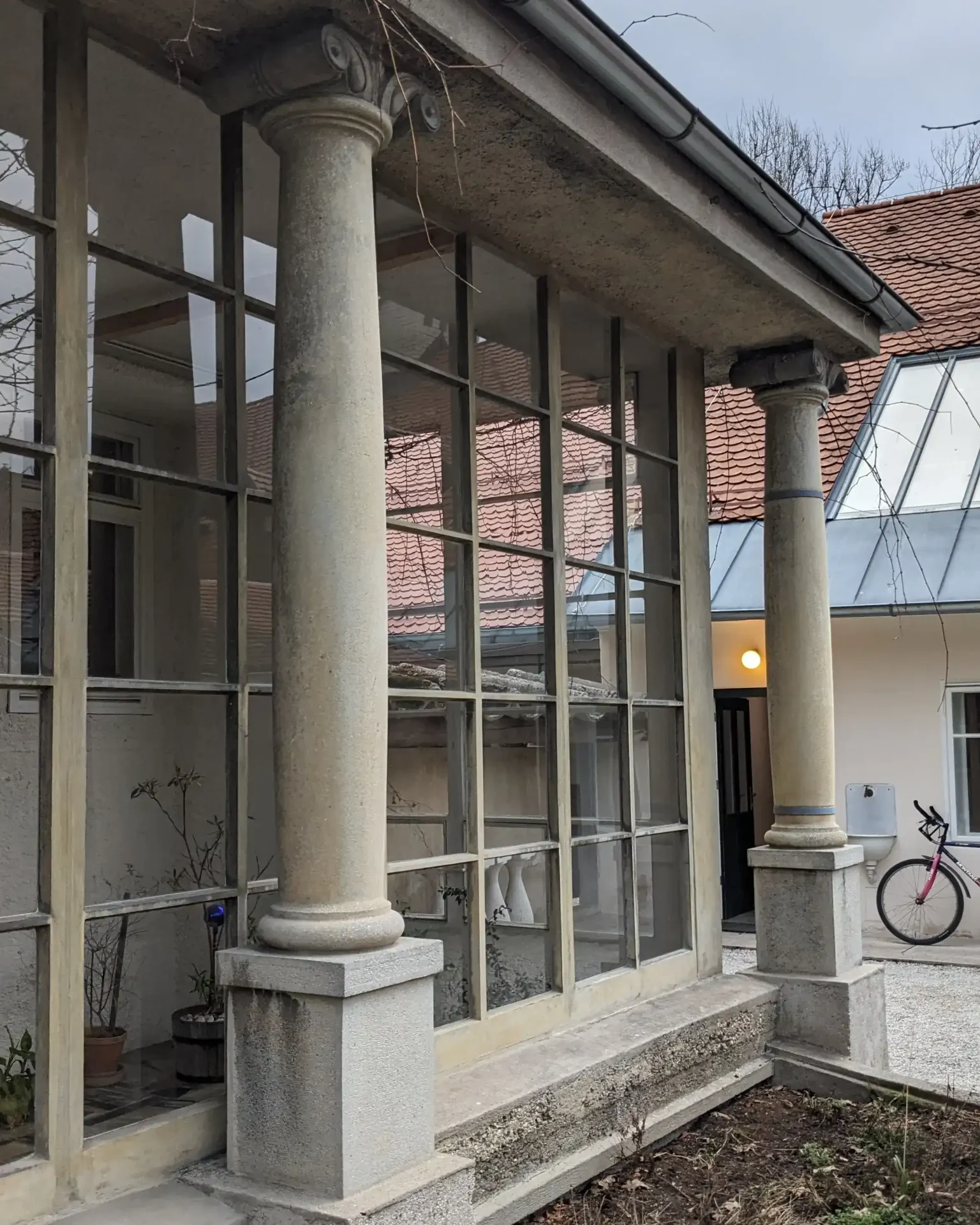
- Plečnik’s house in Trnovo
-
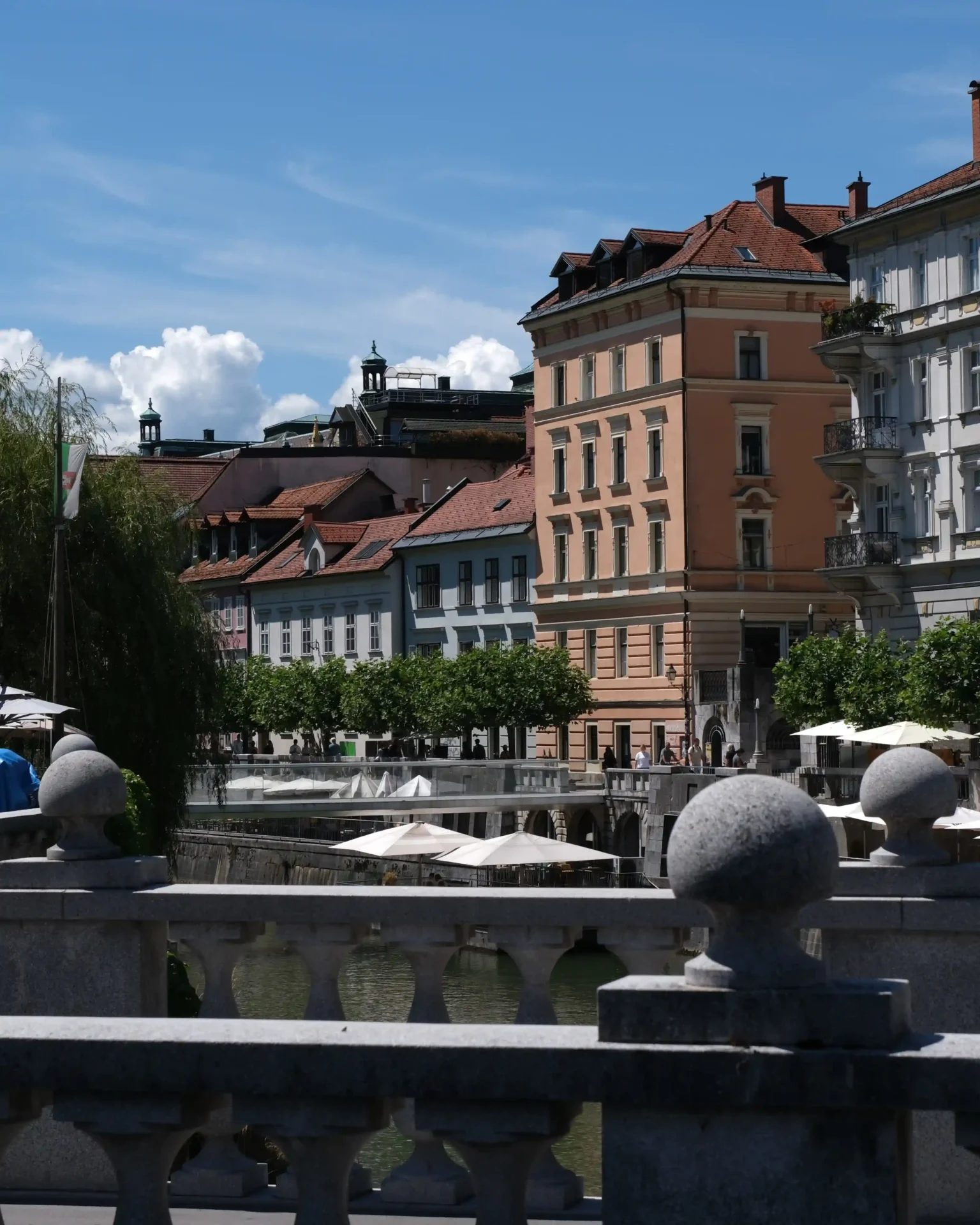
- View from Tromostovje
-
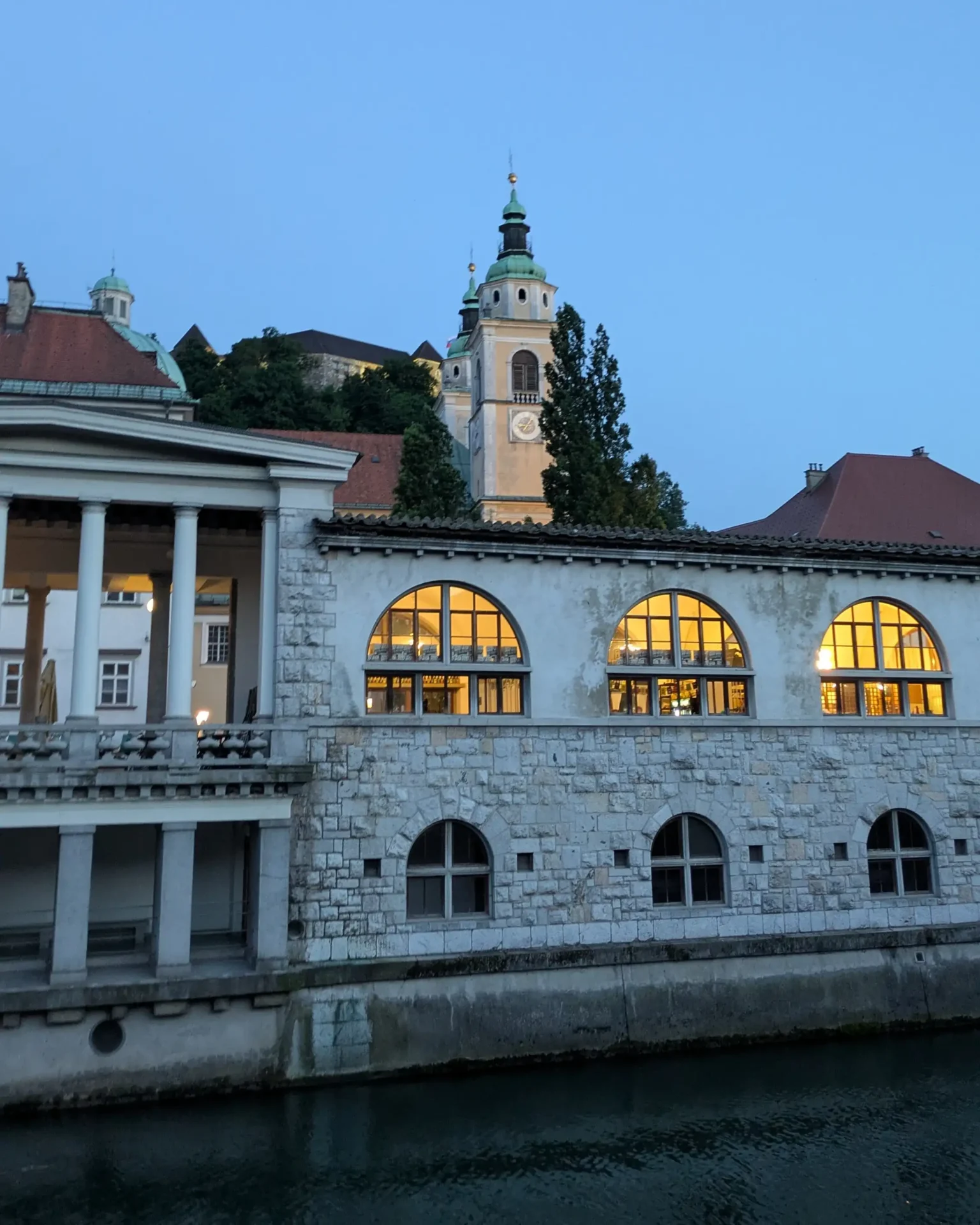
- Plečnik’s Market
-
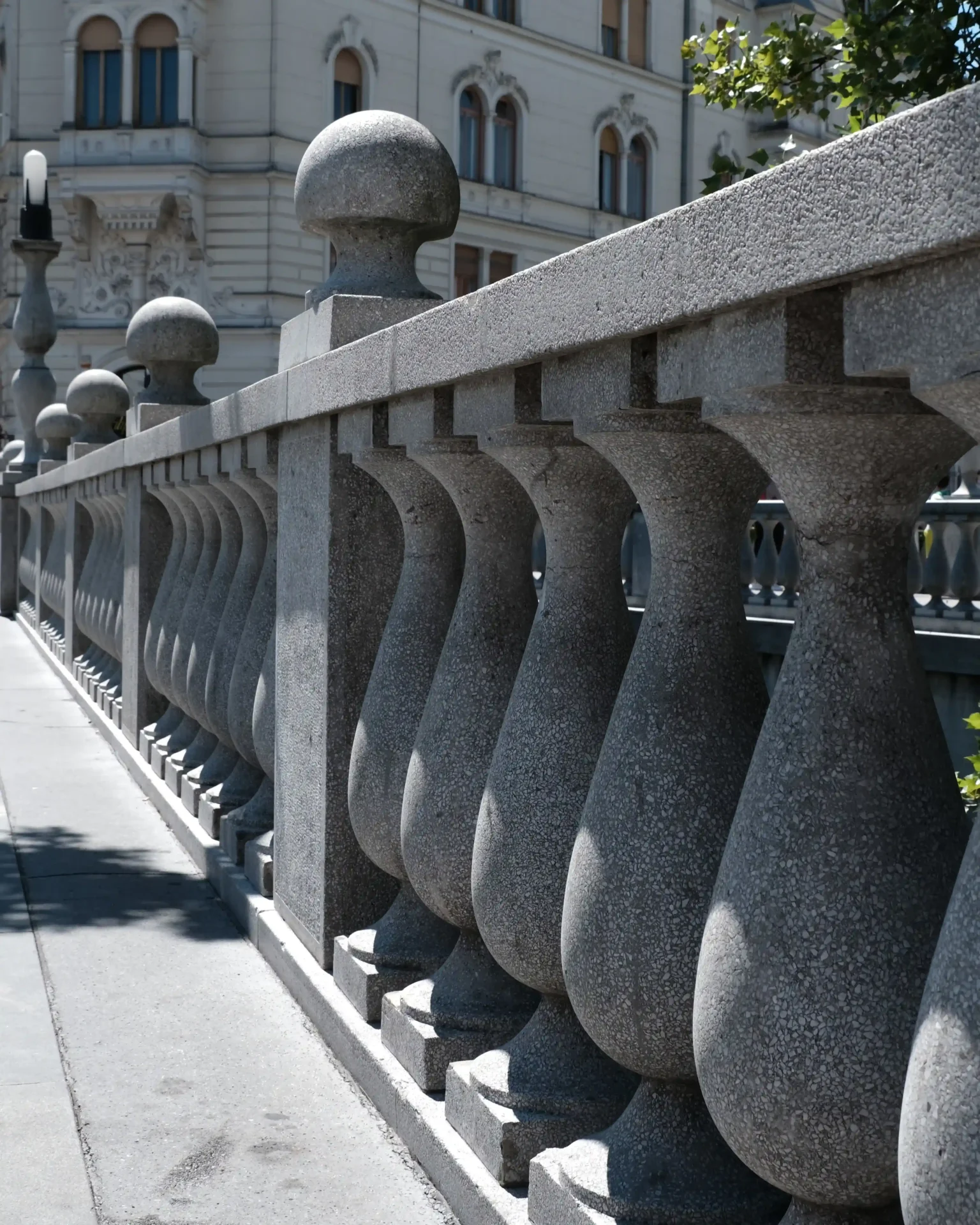
- Details on Tromostovje.
-

- Details on NUK: The windows resemble open books.
-
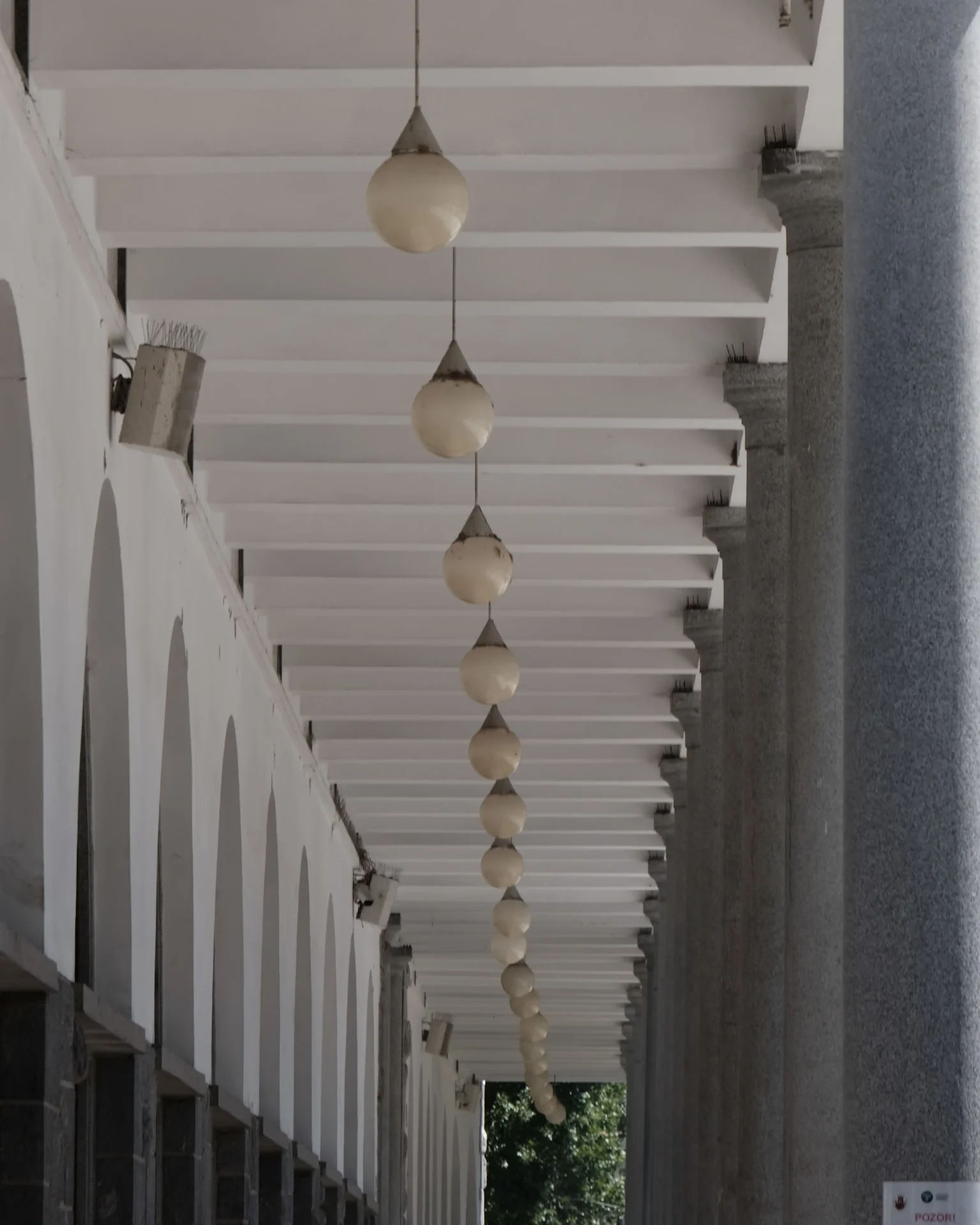
- Details of Plečnik’s Market