

The History of Ljubljana: A Walk Through Time
Slovenia’s Food Festival Calendar: A Season of Flavors from Spring to Autumn
August 7, 2026
Fall in Slovenia: September–November
October 9, 2026The History of Ljubljana: A Walk Through Time
For such a small town, Ljubljana has a wildly rich history. Walk through its streets and you're literally walking through time — from prehistoric settlements on the marshes just outside the city, to Roman walls still standing in the centre, to medieval cobblestones, to the masterpieces of the Secession era, to the brutalist buildings of Yugoslavia, and finally to the city as it is today. Here's how the whole story fits together, and where you can go see each piece of it for yourself.
Koliščarji: a prehistoric settlement
The story starts south of the city, at Ljubljansko barje (the Ljubljana Marshes). This wetland was home to more than 40 pile-dwelling settlements, the oldest dating back to around 5000 BC. People built their houses on wooden piles driven into the marsh, and the waterlogged, oxygen-poor soil preserved an extraordinary amount of organic material — including the world's oldest wooden wheel with an axle, found here in 2002 and dated to roughly 5,200 years old. Two of these sites are now part of a UNESCO World Heritage listing shared with similar pile-dwelling sites across the Alps. You can see actual finds, including that wheel, at the City Museum of Ljubljana, or visit the marshes themselves, which are now a landscape park good for walking or cycling.

Roman city: Emona
Skip forward a few thousand years, and the Romans arrive. In 14–15 AD, they founded Emona (Colonia Iulia Aemona) on the site of today's city centre — a fortified colony of around 5,000–6,000 people, mostly merchants, craftsmen, and retired soldiers. It had the standard Roman package: a grid of streets, stone houses, a sewage system, and defensive walls built from massive stone blocks, some sections of which have survived nearly 2,000 years. Emona thrived for about four centuries before declining with the fall of the Western Roman Empire. Today you can walk the Emona Archaeological Park, see the best-preserved stretch of city wall in the Mirje district (restored according to plans by Jože Plečnik, more on him later), and spot a statue of a Roman citizen on Congress Square, marking the spot where people lived here two millennia ago.
Laibach or Ljubljana? The start of the city as we know it
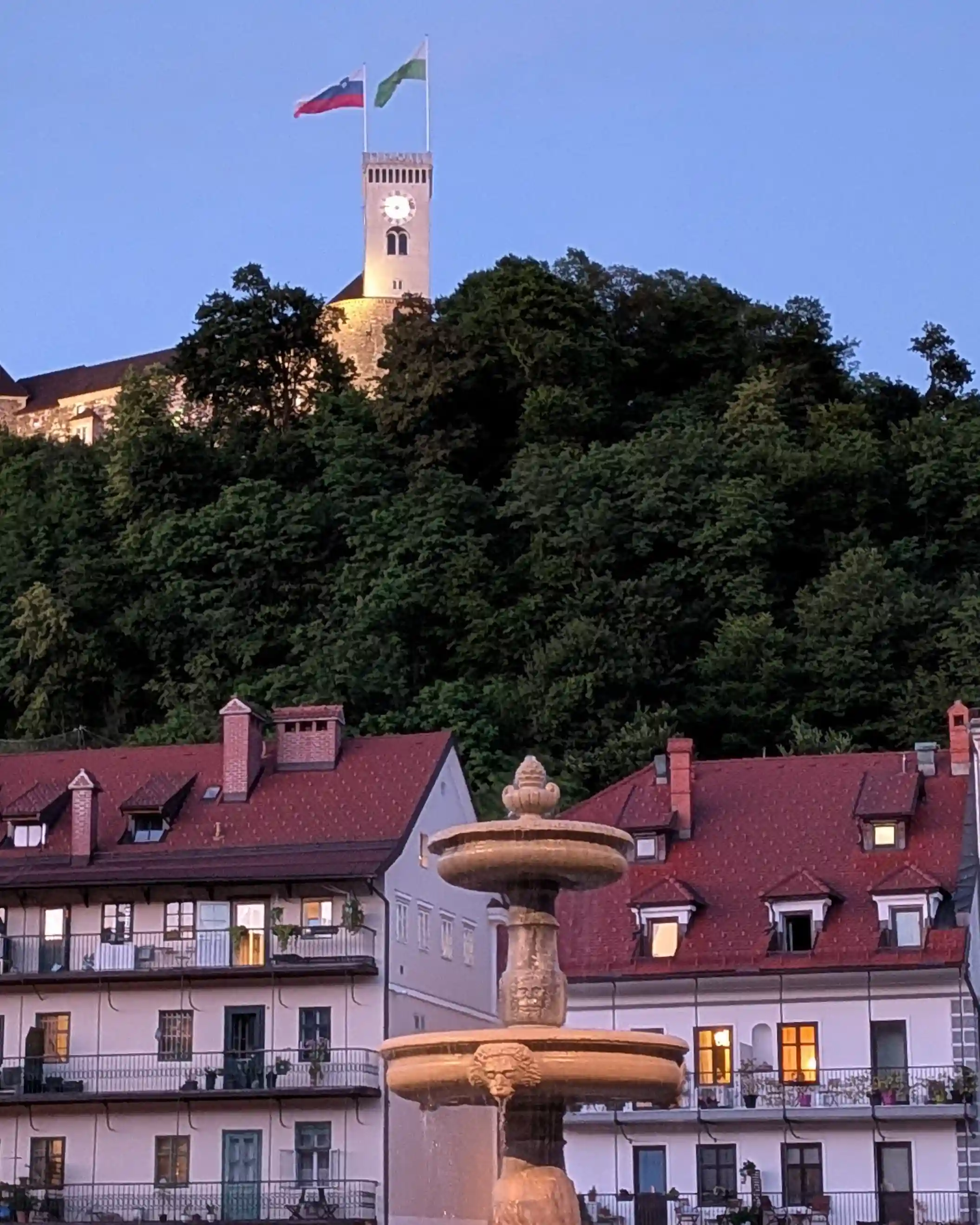
After Emona faded, the area went quiet for a while. The first written mention of a settlement close to the modern name (Luwigana) appears between 1112 and 1125, and by 1144 it shows up in German chronicles as Laibach. By 1220 — possibly a bit later, but no later than 1243 — the town had been granted city rights, including the right to mint its own coins, and its layout at the time still echoes in the city today: Stari trg (Old Square), Mestni trg (Town Square), and Novi trg (New Square) date from this period. In 1335, Ljubljana came under Habsburg rule, a relationship that would last, with a short Napoleonic interruption, until 1918. Under the Habsburgs it became the capital of the Duchy of Carniola, and the two names — Ljubljana and Laibach — existed side by side for centuries, depending on who was doing the naming. You can still feel this era walking the narrow streets of the Old Town below the castle, which sits on the hill where a wooden fortress once stood as early as the 12th century.
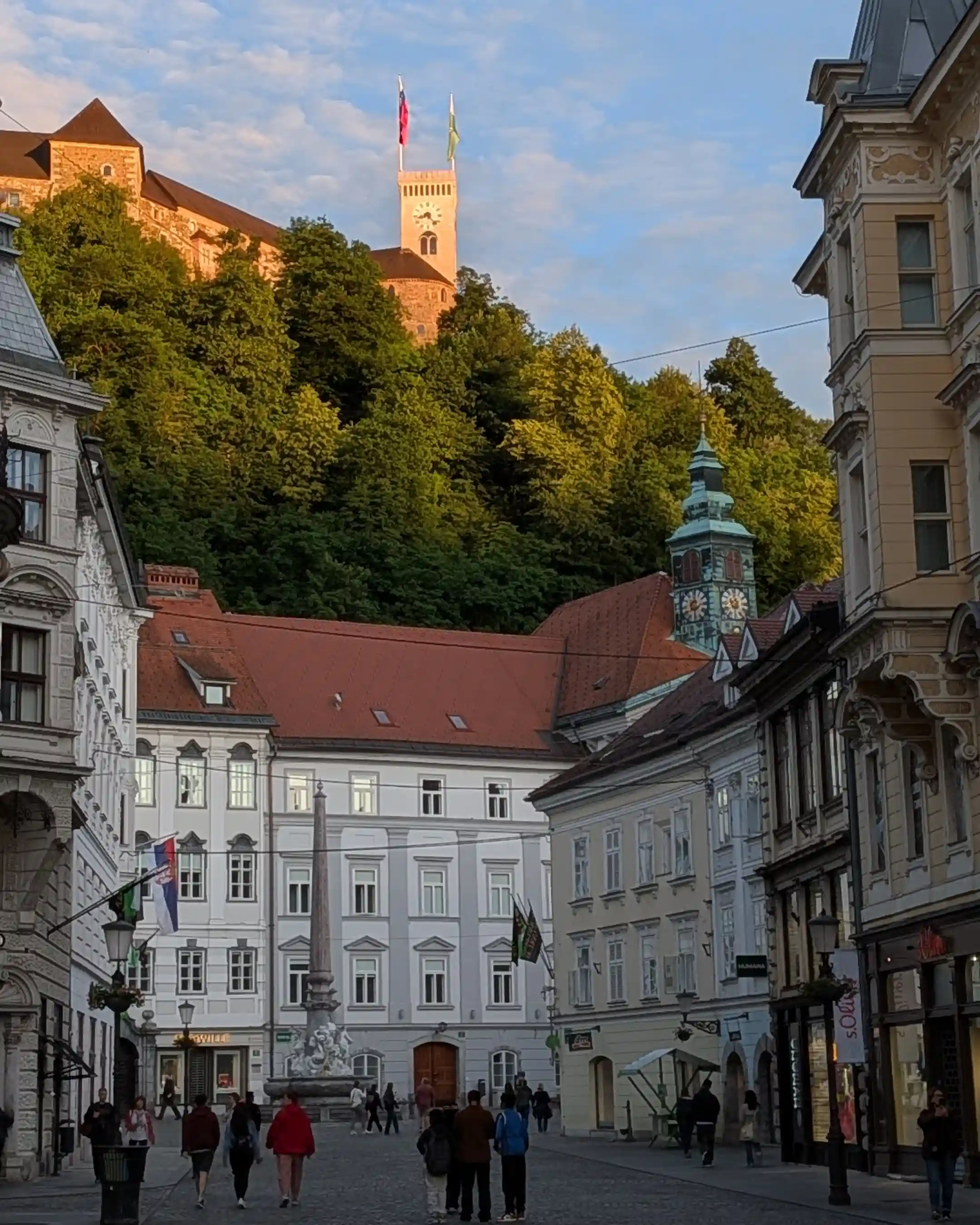
The great earthquake of 1895 and Ljubljana's renaissance in Art Nouveau
On 14 April 1895, a magnitude 6.1 earthquake struck Ljubljana, destroying or damaging around 10% of the city's roughly 1,400 buildings. Only 21 people died, but the shock reshaped the city both physically and psychologically. The rebuilding effort that followed, became a full architectural reinvention. Between 1896 and 1910, over 400 new buildings went up, many in the then-fashionable Vienna Secession style (what's called Art Nouveau elsewhere, and Jugendstil in Germany).
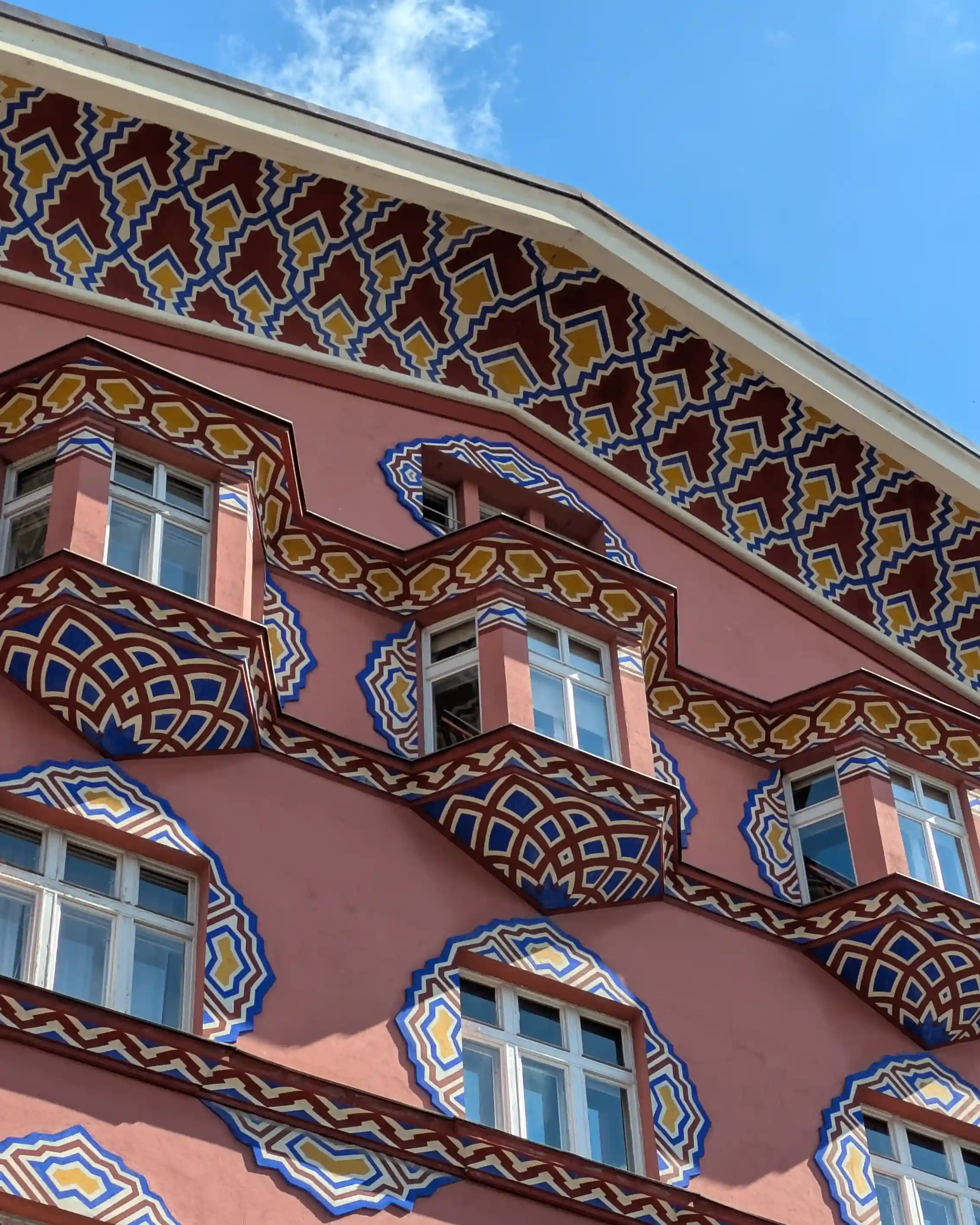
The best place to see it today is Miklošičeva Street, home to the extraordinary Vurnik House — designed by architect Ivan Vurnik with painted decoration by his wife Helena, finished in 1922 and covered in bold colour and Slovenian folk motifs — as well as the Grand Hotel Union and the whimsical Hauptmann House on Prešeren Square, one of the few buildings that actually survived the earthquake and was later remodelled in the new style anyway.
It's also worth mentioning Jože Plečnik here, even though most of his famous work in the city came a bit later: he redesigned the Triple Bridge, built the Central Market along the river, and generally left more of a fingerprint on Ljubljana's identity than perhaps any other single person. His work across the city was recognised by UNESCO in 2021.

Modern day: skyscrapers, Yugoslavia, and now
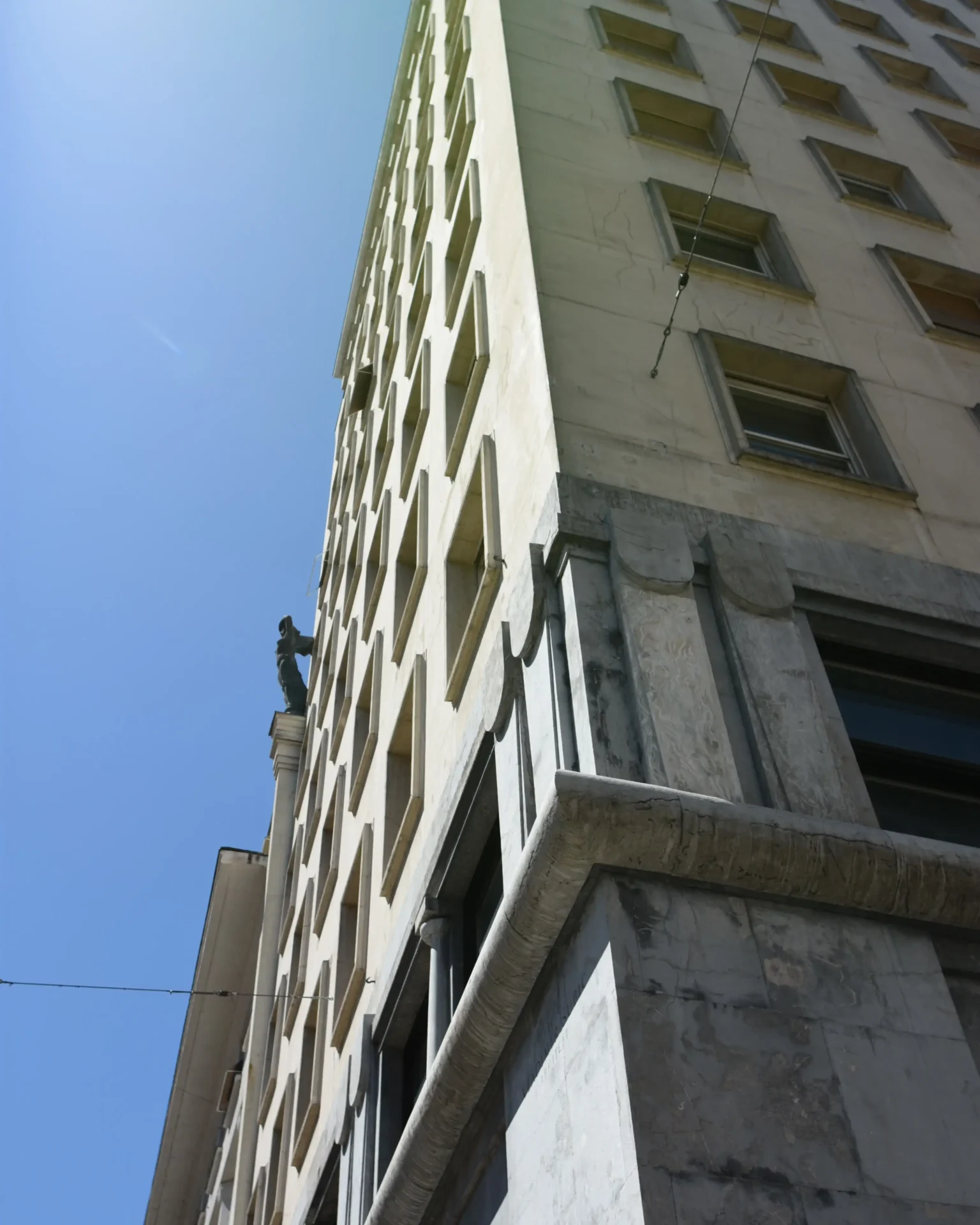
The interwar period brought Ljubljana's biggest architectural flex: the Nebotičnik, or "Skyscraper," completed in 1933 by architect Vladimir Šubic. At 70 metres and 13 storeys, it was the tallest building in the Kingdom of Yugoslavia and, briefly, one of the tallest in Europe — a genuinely controversial project at the time, since it competed for skyline dominance with the castle and church spires. It's still there today, and the café on top remains one of the best viewpoints over the city.
After World War II, Ljubljana became part of socialist Yugoslavia, and the decades that followed brought a very different architectural language: functional, concrete, often brutalist housing blocks and public buildings, particularly in the newer districts built to house a growing population outside the historic centre. It's a sharp visual contrast to the ornate Secession buildings just a short walk away, and it's very much part of the city's layered story rather than something to skip past. One of the best examples of the architecture in the city is Trg republike.
Ljubljana now
Ljubljana today is a genuine mix of all of it at once — Roman ruins built into modern streets, medieval squares a few blocks from Secession townhouses, and 1930s skyscrapers standing near socialist-era blocks and glassy new development. Walking from the castle down through the Old Town, across Plečnik's bridges, and up Miklošičeva Street, you cross two thousand years of history in about twenty minutes. Few cities this size let you do that.