
Art Nouveau in Ljubljana: Architecture at the Turn of a Century
The Ultimate Ljubljana Pizza Guide
10 julija, 2026
Slovenia’s Most Stunning Waterfalls and Gorges (and Where You Can Actually Swim)
7 avgusta, 2026Art Nouveau in Ljubljana: Architecture at the Turn of a Century
At the beginning of the 20th century, Ljubljana was reinventing itself. After the earthquake of 1895, the city was given a rare opportunity to rebuild, and it embraced new architectural ideas that were spreading across Europe. One of the most important of these was Art Nouveau, also known as Secession. The style broke away from historical imitation and introduced new materials, flowing lines, and rich decoration. In Ljubljana, Art Nouveau appears in many variations, ranging from richly decorative façades to restrained, almost proto-modern compositions, which creates a uniquely layered architectural landscape.
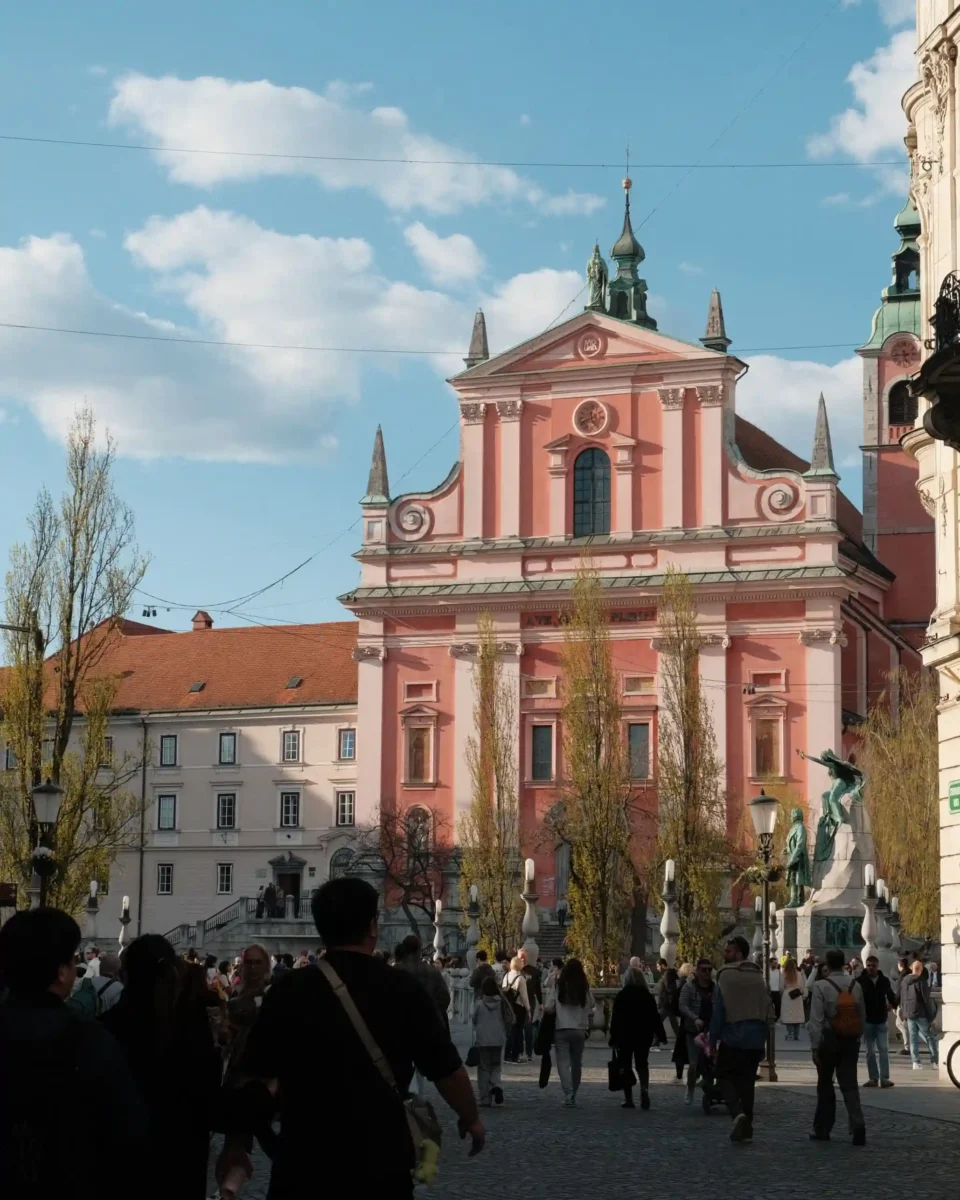
If you want to experience the beauty of the style, take a walk through Prešern Square down Miklošičeva street and surrounding streets and admire the buildings - take a notice of the details such as windows, balconies, tilings and decorative motifs.
Key Art Nouveau Buildings in Ljubljana
Hauptmann House (Wolfova Street 2)
Redesigned in 1904 by Ciril Metod Koch, Hauptmann House is one of the most recognizable examples of Art Nouveau in the city. It stands at the edge of Prešeren Square and immediately draws attention with its colorful façade which is among the most striking examples of Viennese Secession in Ljubljana.
The building is articulated through strong horizontal divisions, with ornament becoming denser toward the upper levels. Its surface is richly clad in colorful ceramic tiles arranged in precise geometric patterns, combined with painted stucco in green, blue, red, and white tones. The rhythmic repetition of windows, paired with stylized linear ornament, gives the façade a vibrant yet controlled appearance. The decorative scheme reflects both modern urban aesthetics and the influence of Otto Wagner’s work in Vienna.

Ljubljana City Savings Bank (Čopova Street 3)
Designed by Josip Vancaš in 1903, this building blends late historicist architecture with emerging Art Nouveau elements. Its long façade is richly decorated with stucco garlands, sculpted heads, and floral motifs which densely cover the surface, creating an almost continuous ornamental skin. Iron-and-glass canopies above the entrances introduce organic, flowing lines that contrast with the building’s otherwise strict symmetry. Inside, parts of the original Art Nouveau interior have been preserved, making it a rare example of the style in use today.
Urbanec Department Store - Centromerkur (Trubarjeva Street 1)
Built in 1902 by Friedrich Sigmund, Urbanec’s was Ljubljana’s first modern department store. The interior was designed as a large, open shopping space, while the exterior combines commercial practicality with elegant Art Nouveau decoration. The most iconic element is the entrance canopy: an elegant composition of wrought iron and glass shaped like unfolding flower petals, supported by delicate metal consoles. The statue above the entrance is the one of Roman God Mercury and symbolises commerce.
Today, the building houses the luxury department store Emporium - take a step inside, whether for some shopping or to admire the gorgeous organically shaped staircase that defines the main shopping hall.


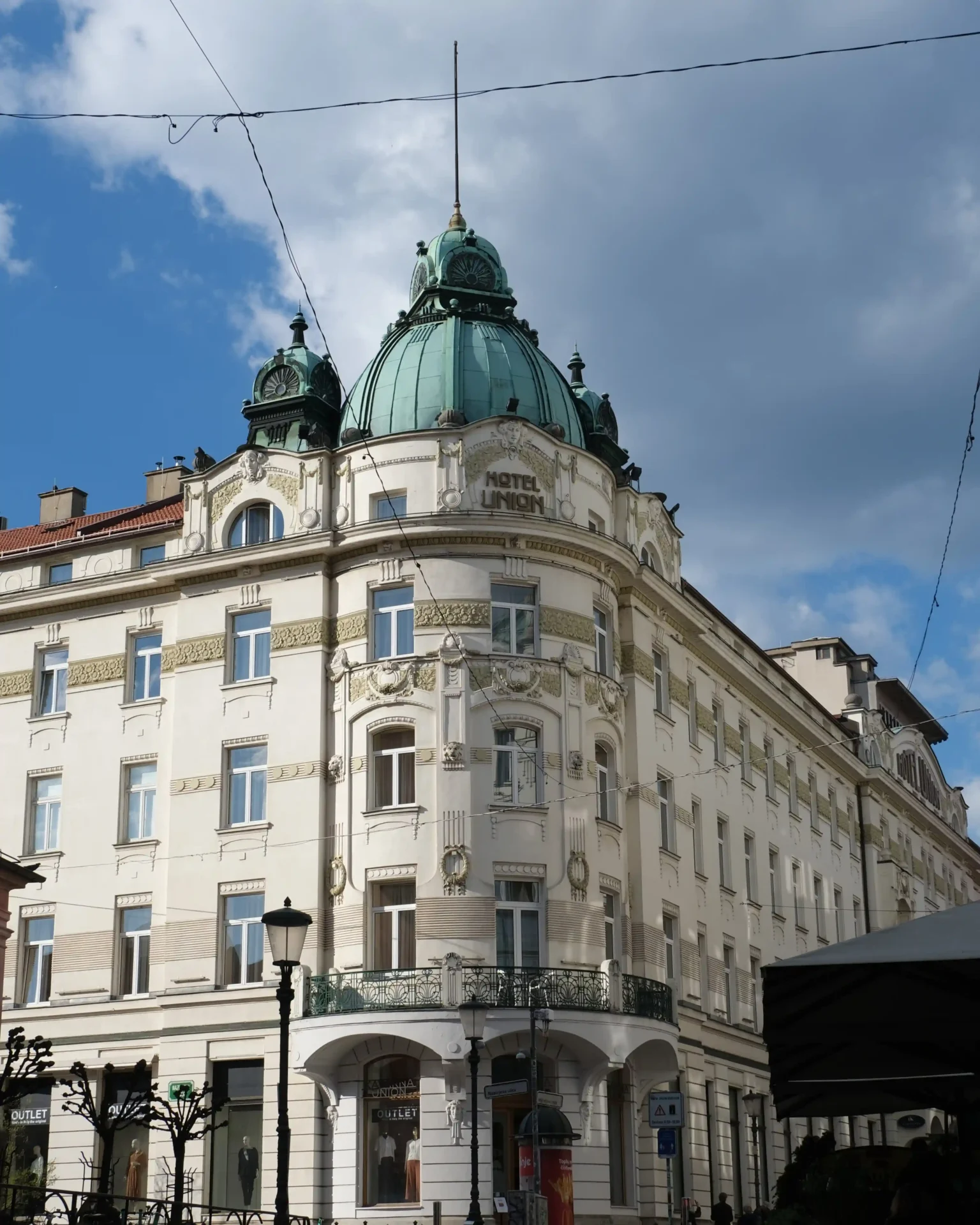
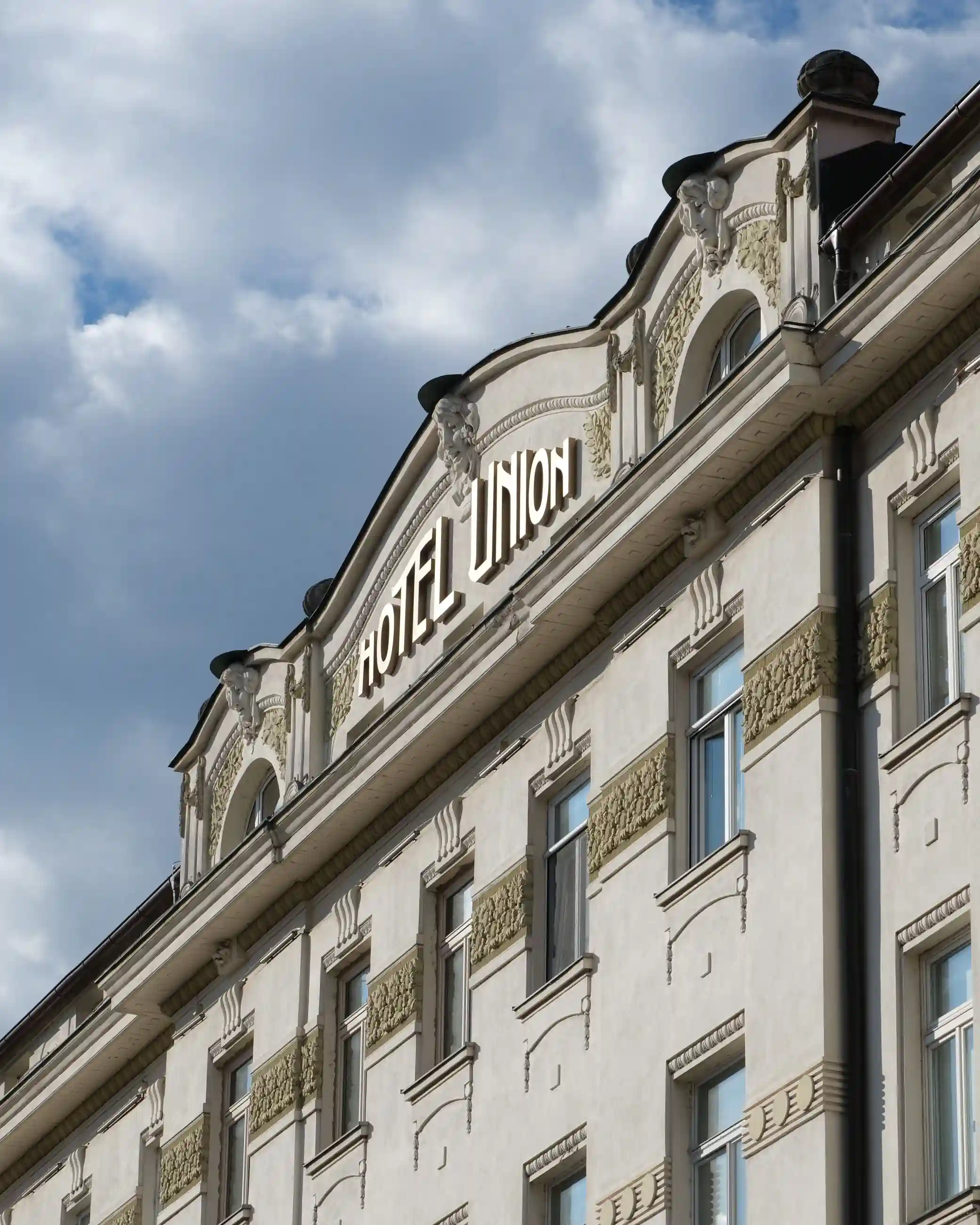
Grand Hotel Union (Miklošičeva 1)
Completed in 1903 by Josip Vancaš, Grand Hotel Union was Ljubljana’s first truly modern hotel. From its exterior to its interiors, the building was conceived as a unified Art Nouveau design. The façade features ornament that grows progressively richer toward the upper floors, with stylized sunflower motifs, circular reliefs, and linear stucco patterns. Iron balconies and decorative canopies soften the building’s mass, while the interior once featured elaborate plaster ceilings, stained glass, and flowing ornamental lines that unified architecture and decoration into a single artistic vision.
Check out the typical secession motifs stained in the glass that are clearly noticeable when walking by from Milošičeva street.
People’s Loan Bank Building (Miklošičeva Street 4)
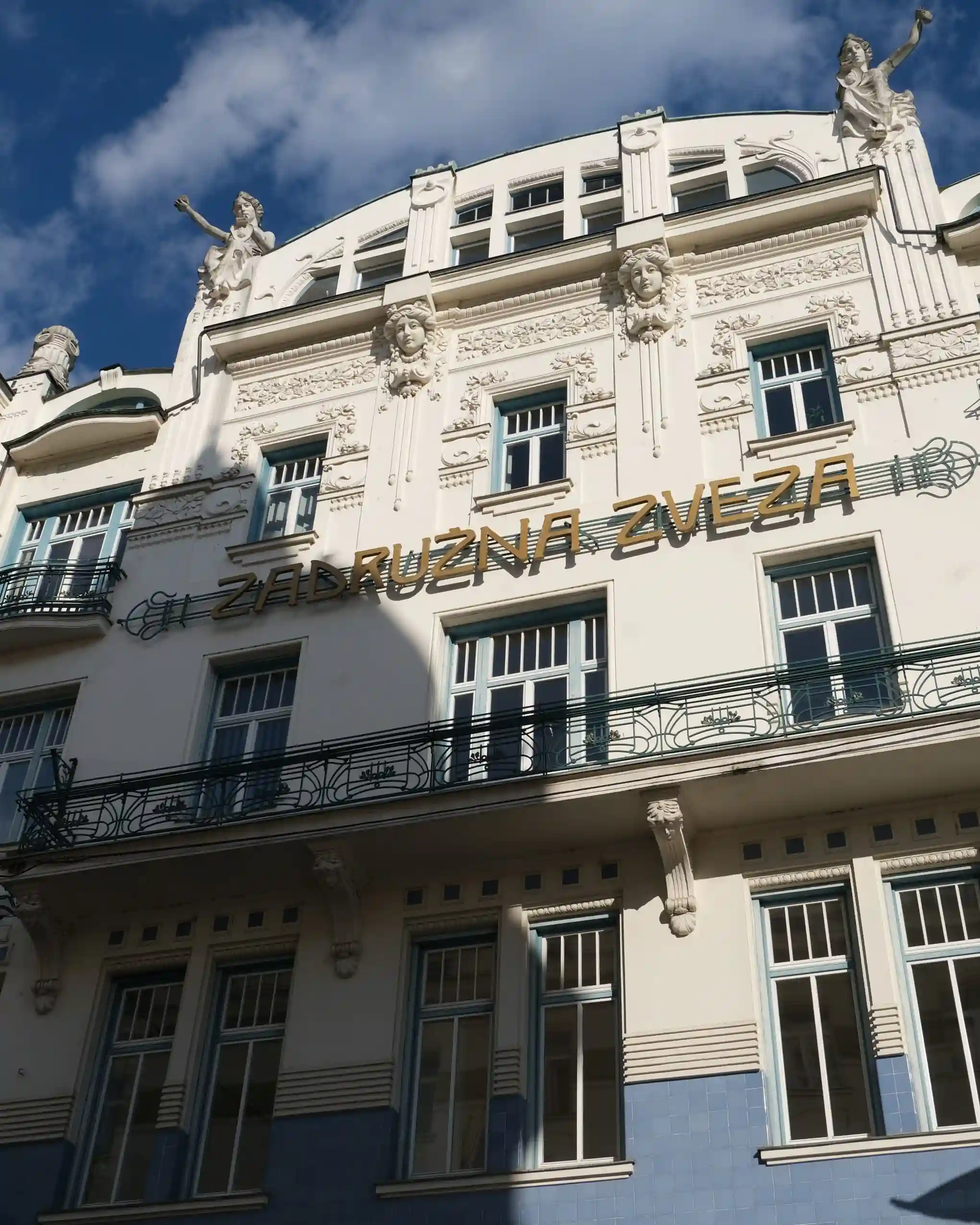
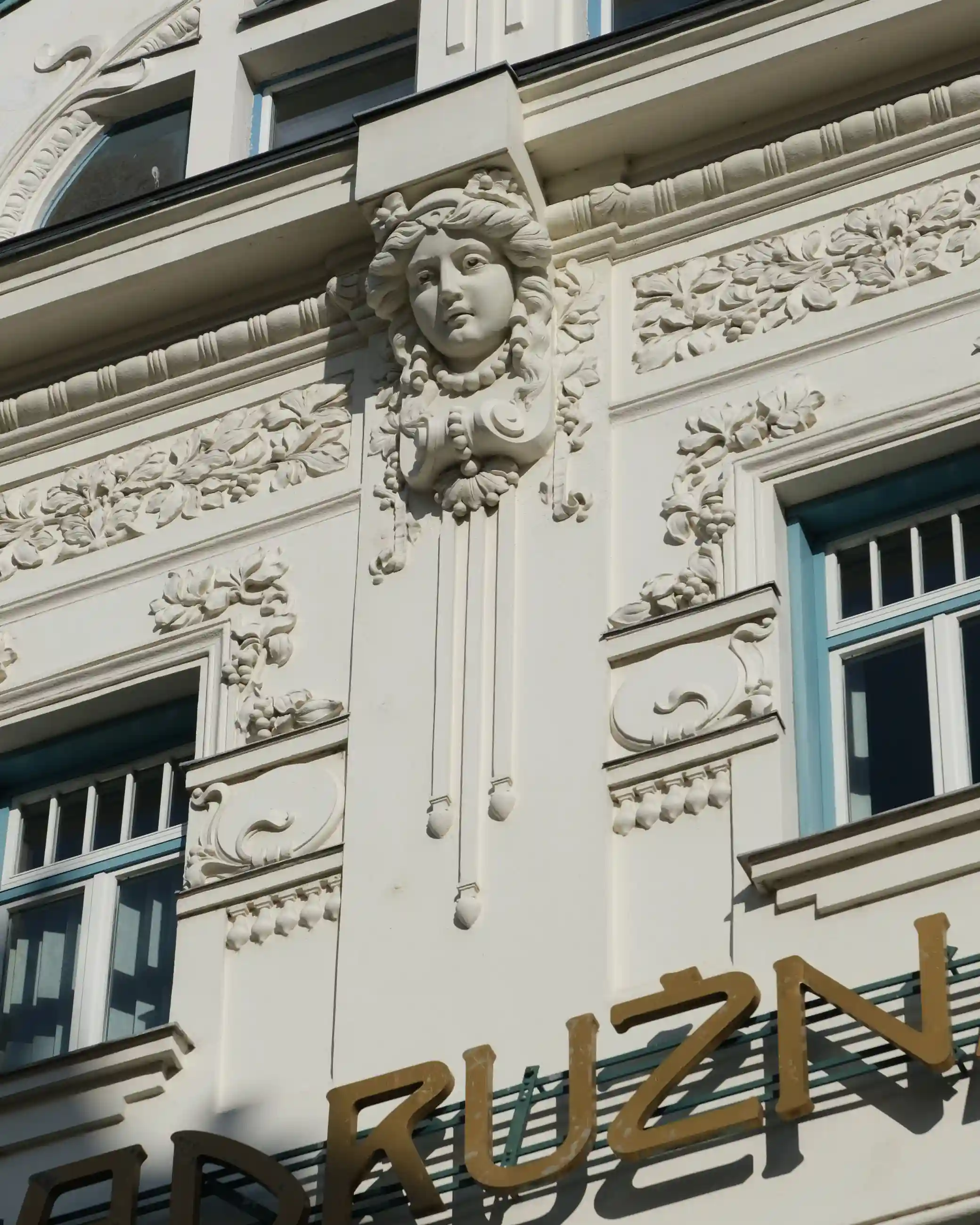
Completed in 1907 and designed by Josip Vancaš, this building marks his full transition into Art Nouveau. The façade shifts from simple geometric decoration on the lower floors to rich floral ornamentation above. Check out richly modeled plant motifs - leaves, buds, and blossoms framing the windows and filling the façade. Sculptural figures and details emphasize ideas of work, savings, and prosperity.
Cooperative Business Bank (Miklošičeva Street 8)
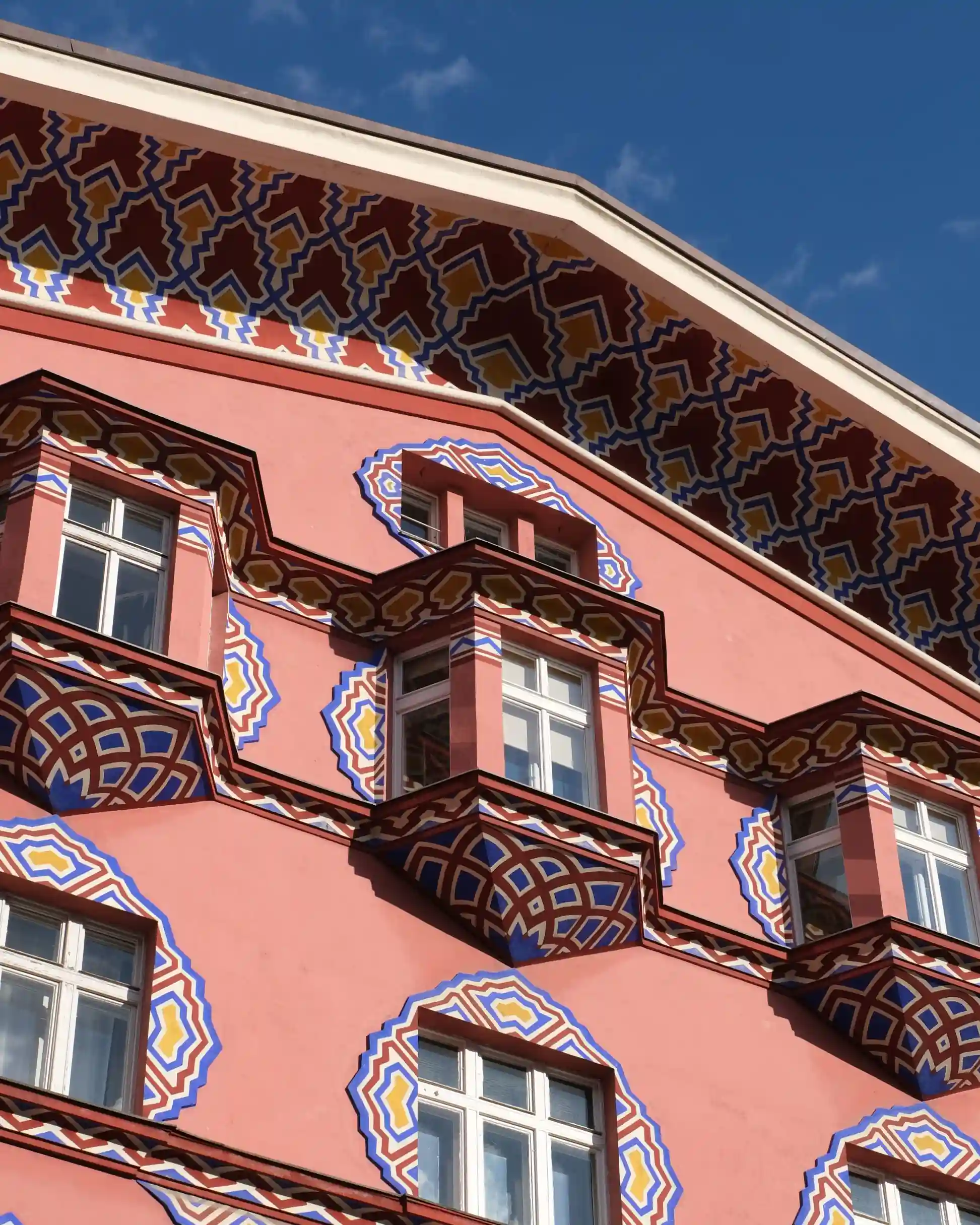
Designed by Ivan Vurnik in 1921, this building represents a later phase of Art Nouveau mixed with a strong national style. Its vibrant façade and painted interior draw on Slovenian folk motifs and traditional colors, making it one of the most striking buildings on Miklošičeva Street.
Krisper House (Miklošičeva Street 20)
Krisper House is Fabiani’s most decorative building in Ljubljana and the only one fully designed in the Art Nouveau style. Stylized floral motifs, ceramic details, and elegant wrought-iron elements give the façade a refined character. Inside, the staircase features an elegant iron balustrade with flowing, plant-like forms.
Hribar House (Tavčarjeva Street 2)
Built in 1902 by Maks Fabiani, Hribar House reflects a rational, modern approach to housing. The façade is based on strict proportions and modular geometry, with decoration kept to a minimum. Rather than ornament, the building relies on structure and balance for its visual impact.
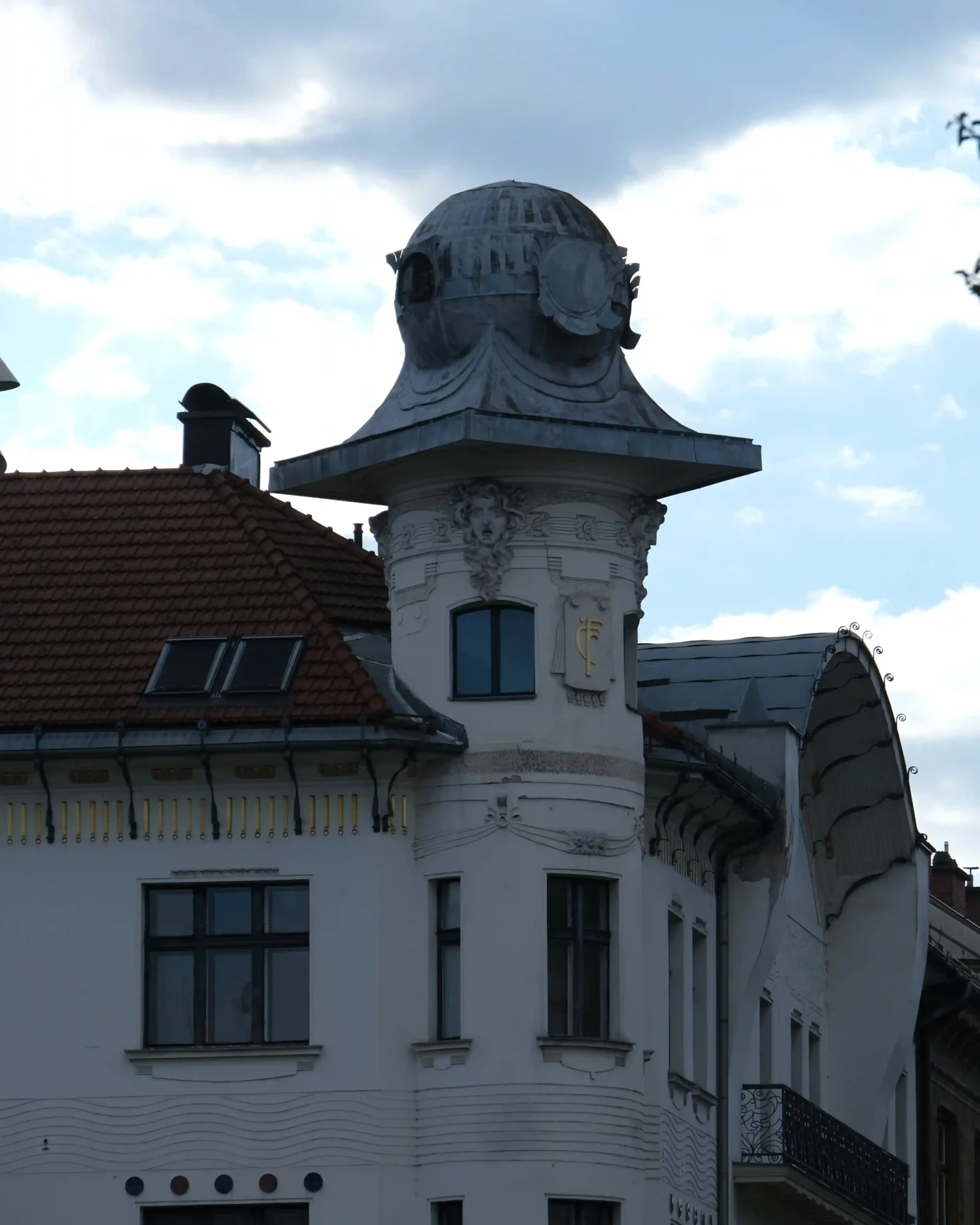
Čuden House (Cigaletova Street 3)
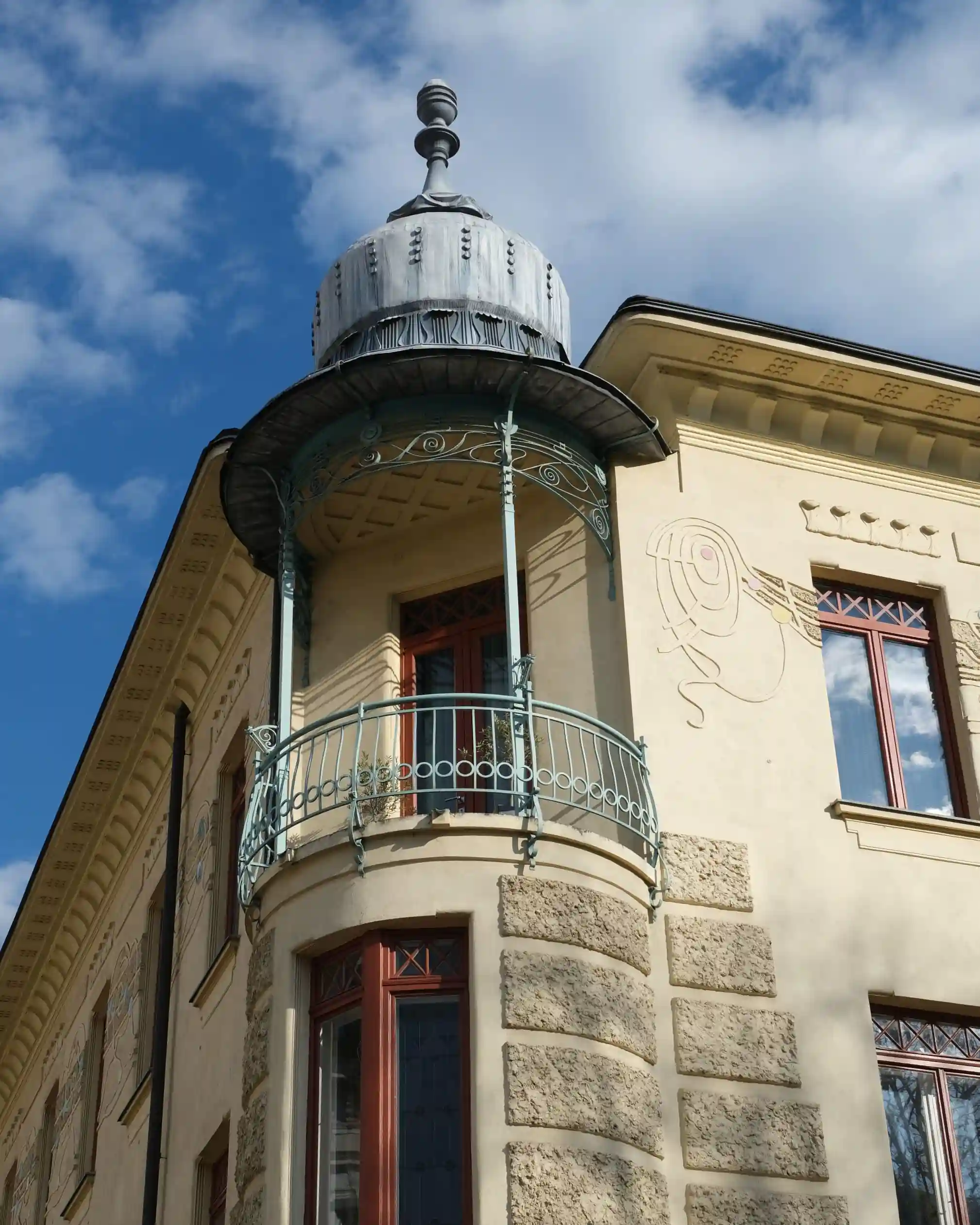
Designed by Ciril Metod Koch in 1902, this corner building features a lively façade, abundant decoration, and a distinctive corner tower with a globe. It is a typical example of an upper-middle-class Art Nouveau residential building from the period.
Mladika – Girls’ Lyceum and Boarding School (Prešernova Street 25)
The school was designed by Maks Fabiani between 1906 and 1907, with the boarding school added a few years later by C. M. Koch. Unlike more decorative Art Nouveau buildings, Mladika is restrained and almost austere. Fabiani combined modern ideas with references to local tradition, signaling a move toward a more regional architectural language.
Today, the Ministry of Foreign Affairs resides in the building so the access is restricted.
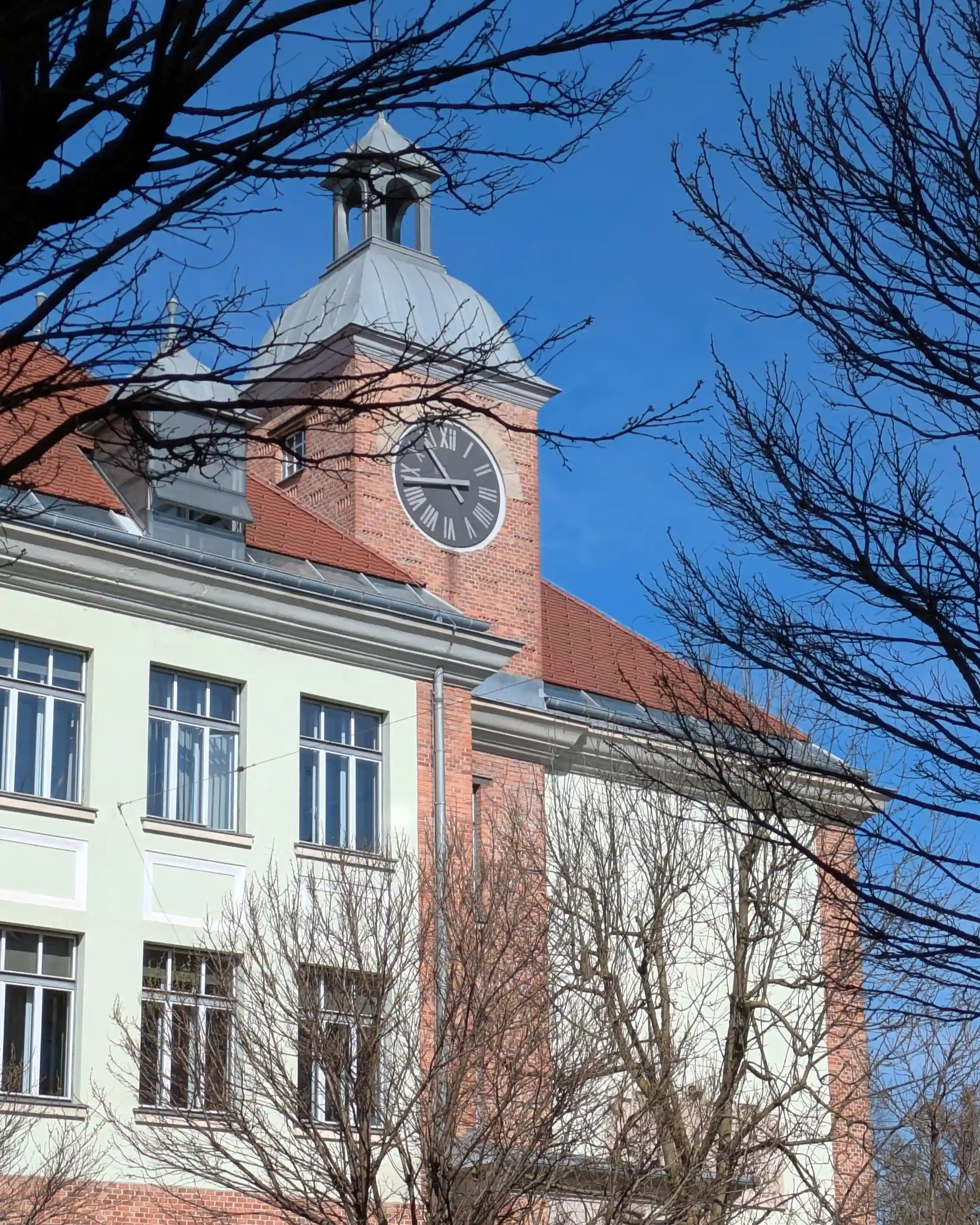
German Theatre – Today SNG Drama Ljubljana (Erjavčeva Road 1)
Designed by Alexander Graf in 1909, the theatre combines historicist massing with Art Nouveau decorative elements. The façade is organized symmetrically, with emphasis on the central axis, while ornamental details - stucco frames, inscriptions, and reliefs - soften the composition.
Girls’ School (Levstikov Square 1)
The façade, redesigned by Maks Fabiani, is characterized by clean horizontal divisions and reduced ornament. Decorative elements are limited to stylized floral reliefs, sculpted garlands, and subtle stucco detailing beneath the roofline. The restrained approach highlights proportion, rhythm, and surface treatment rather than expressive ornamentation. Its balanced proportions and subtle Art Nouveau elements reflect its public and educational purpose.
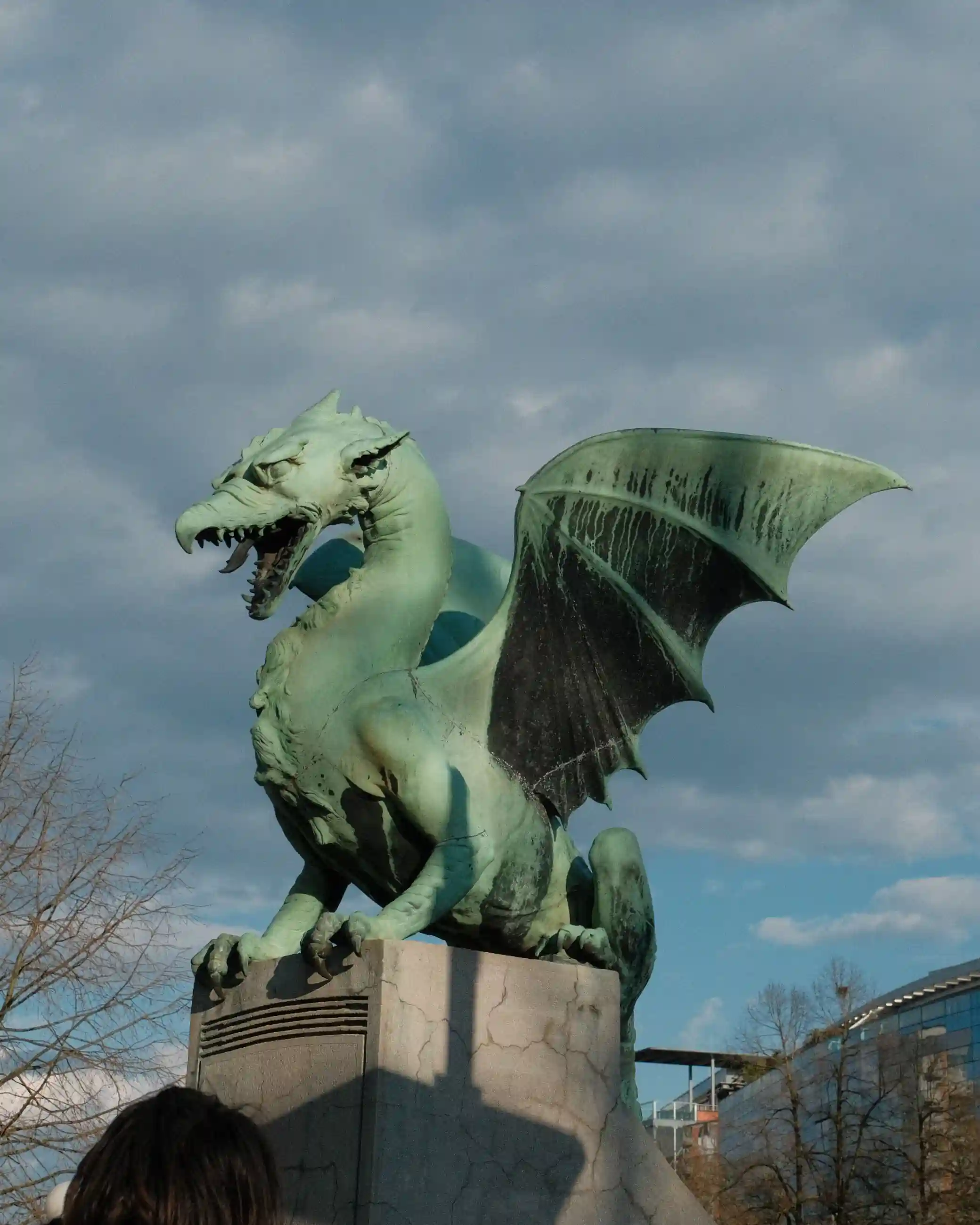
Dragon Bridge
Opened in 1901 and designed by Jurij Zaninović, Dragon Bridge is one of Ljubljana’s most famous landmarks. Built using reinforced concrete, it was highly innovative for its time. The bridge’s structure is visually softened by decorative surfaces treated to resemble stone. Relief panels, stylized balustrades, and lanterns contribute to the overall ornamental scheme.The copper dragon statues that guard the edges have since become an enduring symbol of the city and one of the best-known examples of Art Nouveau bridge design in Europe.
Map of Key Art Nouveau Buildings and Sights in Ljubljana
Sources
-
Art Nouveau [online]. 2017. Wikipedia, the Free Encyclopedia. [Accessed 19 March 2018, 18:36]. Available at: https://sl.m.wikipedia.org/wiki/Posebno:History/Art_nouveau
-
Grand Hotel Union [online]. 2018. Visit Ljubljana. [Accessed 14 March 2018, 10:31]. Available at: https://www.visitljubljana.com/sl/obiskovalci/nastanitev/grand-hotel-union/
-
Ljubljana Drama Theatre [online]. 2017. Wikipedia, the Free Encyclopedia. [Accessed 23 March 2018, 20:59]. Available at: https://sl.m.wikipedia.org/wiki/Ljubljanska_Drama
-
Pirkovič, Jelka, and Breda Mihelič. 1997. Art Nouveau Architecture in Slovenia. Ljubljana: Ministry of Culture. ISBN 961-6037-23-4.
-
Art Nouveau (Period) [online]. 2015. Wikipedia, the Free Encyclopedia. [Accessed 20 March 2018, 20:02]. Available at: https://sl.wikipedia.org/wiki/Secesija_(obdobje)
-
Art Nouveau Ljubljana [online]. 2018. Visit Ljubljana. [Accessed 14 March 2018, 10:31]. Available at: https://www.visitljubljana.com/sl/obiskovalci/aktivnosti/znamenitosti/clanek/secesijska-ljubljana/
-
Dragon Bridge [online]. 2018. Wikipedia, the Free Encyclopedia. [Accessed 23 March 2018, 22:14]. Available at: https://sl.m.wikipedia.org/wiki/Zmajski_most